







What's Happening?
The Paris-Roubaix race, known as 'Hell of the North,' remains one of the most challenging events in professional cycling. Despite his numerous victories in other races, four-time Tour de France winner Tadej Pogacar has yet to conquer Paris-Roubaix. The race's
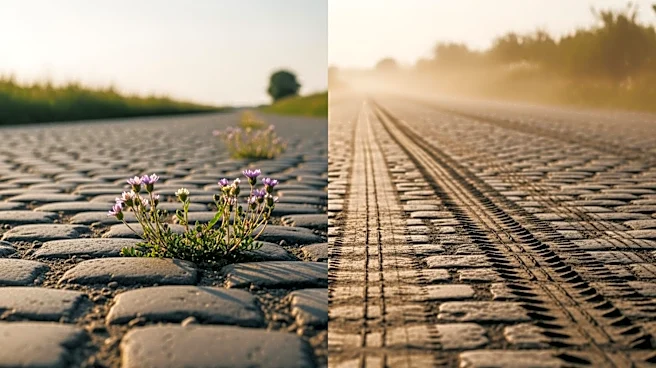
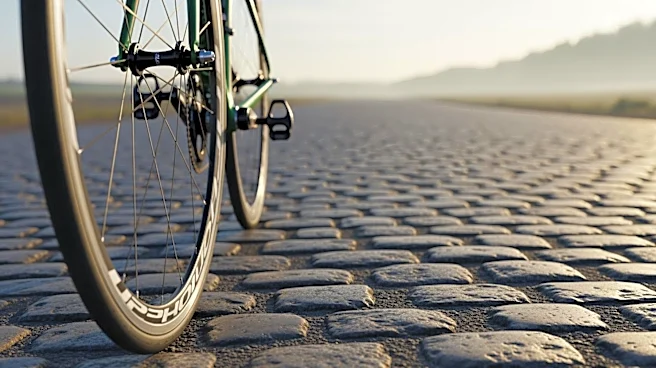
30 sectors of cobblestones present a unique challenge, often leading to mechanical failures and physical exhaustion. On Sunday, Pogacar was defeated by Belgian cyclist Wout van Aert in a sprint finish at the Roubaix velodrome. The race's brutal nature is highlighted by its history and the dedication of volunteers who maintain the cobblestones, ensuring the course remains both safe and challenging.
Why It's Important?
Paris-Roubaix is a significant event in the cycling calendar, known for its difficulty and unpredictability. The race tests the limits of cyclists' endurance and skill, often resulting in dramatic outcomes. Pogacar's continued struggle to win this race underscores the unique challenges it presents, even to the most accomplished riders. The event draws attention to the physical demands of cycling and the importance of strategy and resilience. It also serves as a cultural touchstone, attracting spectators who appreciate the race's history and the spectacle of athletes battling the cobblestones.
What's Next?
As Pogacar and other top cyclists continue to compete in Paris-Roubaix, they will likely refine their strategies to overcome the race's challenges. The event's organizers and volunteers will maintain the cobblestones, preserving the race's unique character. Fans and analysts will watch future editions of the race closely, anticipating whether Pogacar can eventually secure a victory. The race will continue to be a highlight of the cycling season, drawing international attention and showcasing the sport's demanding nature.
Beyond the Headlines
Paris-Roubaix's enduring appeal lies in its ability to challenge even the most skilled cyclists, highlighting the unpredictable nature of the sport. The race's history and the dedication of those who maintain the cobblestones add depth to its cultural significance. It serves as a reminder of the physical and mental resilience required in cycling, where success is often hard-won and fleeting.