





What's Happening?
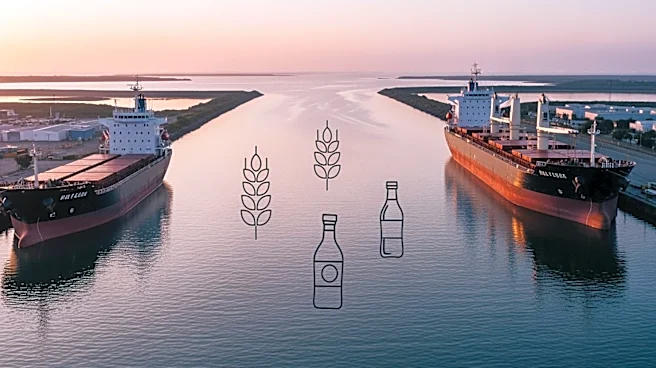
A two-week ceasefire between the US and Iran has been announced, leading to the temporary reopening of the Strait of Hormuz, albeit with limited movements. This development impacts food and beverage companies, particularly in terms of packaging materials
sourced from the Middle East, such as polyethylene and aluminum. Fertilizer supplies, crucial for global crop production, are also affected. The closure has led to increased oil prices, raising transportation costs for food and beverage products. Companies are facing challenges in predicting outcomes and planning around various scenarios due to the ongoing uncertainty.
Why It's Important?
The reopening of the Strait of Hormuz is significant for the global food and beverage industry, as it alleviates some supply chain pressures. However, the uncertainty surrounding the situation requires companies to be agile and prepared for various scenarios. The impact on packaging materials and transportation costs could lead to increased product prices, affecting consumer purchasing behavior. Companies that can adapt quickly and strategically manage their supply chains will be better positioned to mitigate risks and capitalize on opportunities. This situation underscores the importance of resilience and strategic planning in navigating geopolitical disruptions.
What's Next?
Food and beverage companies will need to continue monitoring the situation closely and adjust their strategies accordingly. They may explore diversifying their supply sources to reduce reliance on the Middle East. Strategic decisions regarding commodity purchasing and portfolio adjustments may be necessary to maintain profitability. Companies that develop robust contingency plans will be better equipped to handle future disruptions, ensuring continuity and stability in their operations.