





What's Happening?
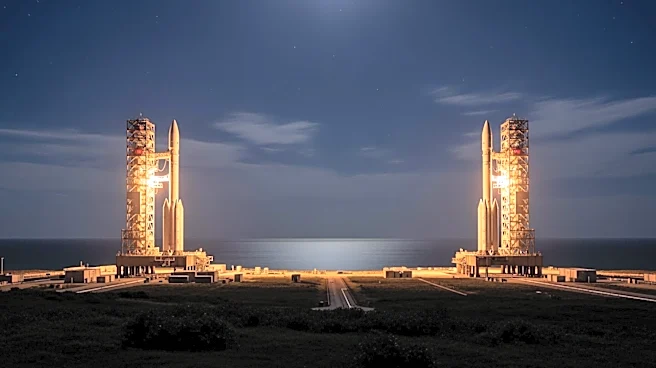
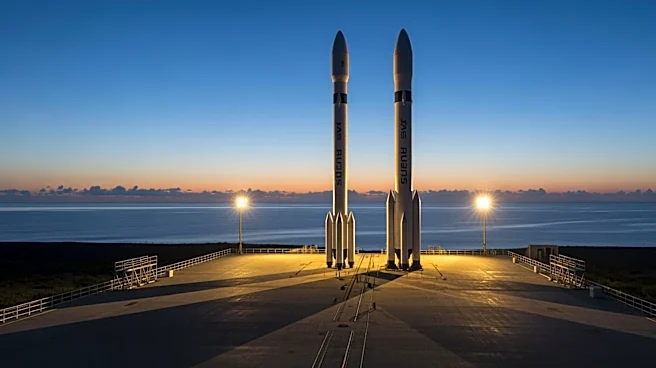
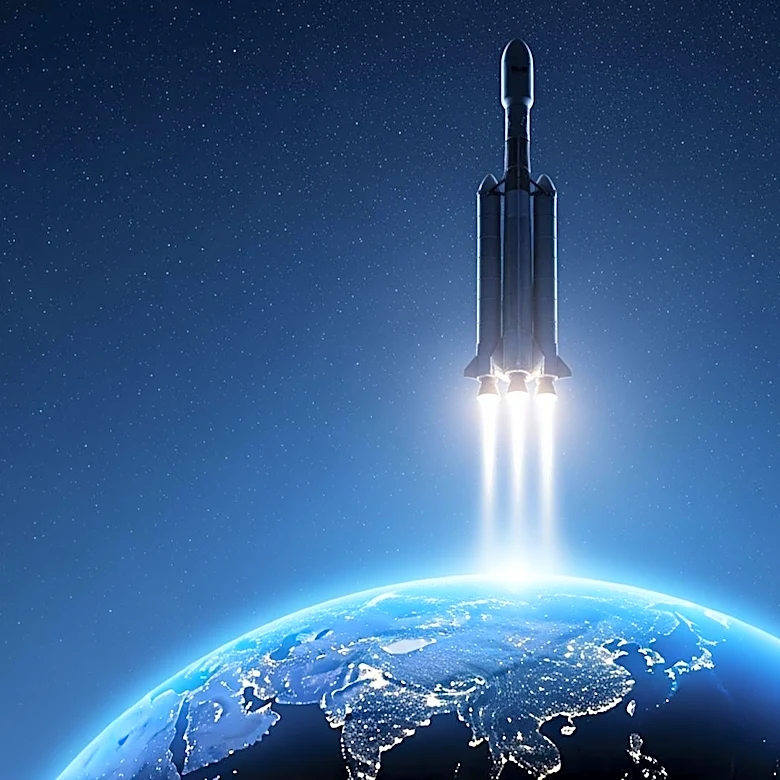
SpaceX's Falcon Heavy rocket is set to launch from NASA's Kennedy Space Center in Florida on April 27, 2026, marking its return after an 18-month hiatus. The mission involves deploying the ViaSat-3 F3 communications satellite, which will provide high-throughput
broadband services across the Asia-Pacific region. The Falcon Heavy, known for its powerful thrust of approximately 5.1 million pounds, is the second most powerful operational rocket, surpassed only by NASA's Space Launch System. The rocket's design includes three modified Falcon 9 first-stage boosters, and this launch will be its 12th mission. The satellite will be placed in geostationary orbit, allowing it to remain fixed over a specific geographic area.
Why It's Important?
The return of the Falcon Heavy is significant for the commercial space industry, showcasing SpaceX's capability to deliver large payloads to orbit. This mission supports the expansion of global broadband connectivity, particularly in the Asia-Pacific region, which can enhance communication infrastructure and economic development. The successful deployment of the ViaSat-3 F3 satellite will complete Viasat's global constellation, providing comprehensive coverage and potentially boosting the company's market position. Additionally, the mission highlights SpaceX's role in advancing space technology and maintaining its competitive edge in the aerospace sector.
What's Next?
Following the launch, the ViaSat-3 F3 satellite will undergo several months of in-orbit testing before entering service by late summer 2026. The successful completion of this mission could lead to further contracts for SpaceX, as the demand for satellite-based broadband services continues to grow. The Falcon Heavy's performance will be closely monitored, and its success could influence future missions and collaborations with international partners. The aerospace industry will be watching to see how SpaceX continues to innovate and expand its capabilities in the coming years.