

What's Happening?
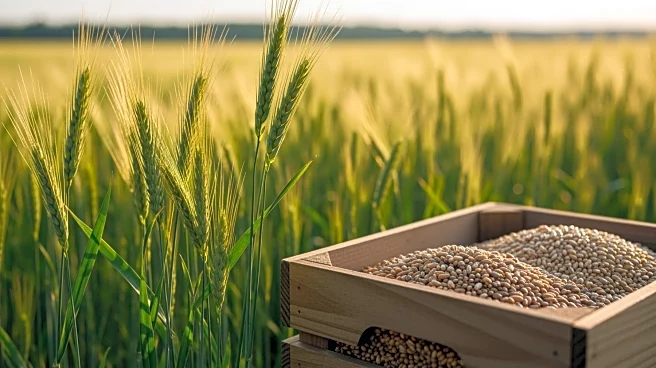
Finance Minister Nirmala Sitharaman announced new initiatives in the Union Budget for 2026-27 aimed at enhancing agricultural productivity and supporting rural women entrepreneurs. The initiatives include Bharat Vistar, a multilingual AI tool designed to integrate agricultural resources and provide customized advisory support to farmers. This tool aims to enhance productivity and enable better decision-making by integrating the Agristack portal and ICAR package on agricultural practices with AI systems. Additionally, the Finance Minister introduced SHE Marts, a program to support rural women-led enterprises. This initiative builds on the success of the Lakhpati Didi program and aims to transition women from credit-linked livelihoods to enterprise ownership.
SHE Marts will be community-owned retail outlets established within cluster development federations, supported by innovative financing instruments.
Why It's Important?
The introduction of Bharat Vistar and SHE Marts represents a significant step towards modernizing agriculture and empowering rural women in India. By leveraging AI technology, Bharat Vistar is expected to improve agricultural productivity and reduce risks for farmers, which could lead to increased agricultural output and economic stability in rural areas. The focus on rural women entrepreneurs through SHE Marts is crucial for promoting gender equality and economic empowerment. By facilitating the transition from livelihoods to enterprise ownership, this initiative could lead to increased economic participation of women, fostering community development and reducing poverty. These initiatives align with broader goals of sustainable development and economic growth, potentially setting a precedent for similar programs in other regions.
What's Next?
The successful implementation of Bharat Vistar and SHE Marts will require collaboration between government agencies, agricultural experts, and rural communities. Monitoring and evaluation mechanisms will be essential to assess the impact of these initiatives on agricultural productivity and women's economic empowerment. Stakeholders may need to address challenges such as technological adoption, access to financing, and market integration. The government may also consider expanding these programs based on initial outcomes, potentially scaling them to other regions or sectors. Continued support and investment in rural infrastructure and education will be critical to maximizing the benefits of these initiatives.