



What's Happening?
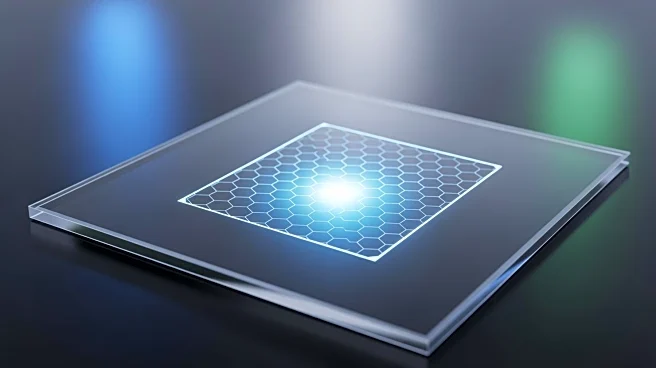
Researchers at the University of Connecticut, led by Professor Guoan Zheng, have developed a groundbreaking image sensor that achieves optical super-resolution without the need for lenses. This innovation, detailed in a study published in Nature Communications, utilizes a method called synthetic aperture imaging. This technique, inspired by the telescope array that captured the first black hole image, involves multiple sensors working together to computationally merge their observations, allowing for the capture of finer details. The new device, known as the Multiscale Aperture Synthesis Imager (MASI), overcomes traditional synchronization challenges by allowing each sensor to measure light independently. Computational algorithms are then used
to synchronize the data, eliminating the need for precise physical alignment. This approach enables the capture of high-resolution, wide-field images at optical wavelengths, a feat previously hindered by the limitations of traditional optics.
Why It's Important?
The development of the MASI represents a significant advancement in optical imaging technology, with potential applications across various fields such as forensic science, medical diagnostics, industrial inspection, and remote sensing. By eliminating the need for cumbersome lenses and strict alignment constraints, this technology offers a more flexible and scalable solution for capturing high-resolution images. The ability to resolve smaller features from a distance without invasive procedures could revolutionize practices in fields that require detailed imaging. Furthermore, the scalability of the MASI system suggests that it could be adapted for large arrays, opening up possibilities for applications that have yet to be imagined. This innovation not only enhances current imaging capabilities but also sets the stage for future developments in optical technology.
What's Next?
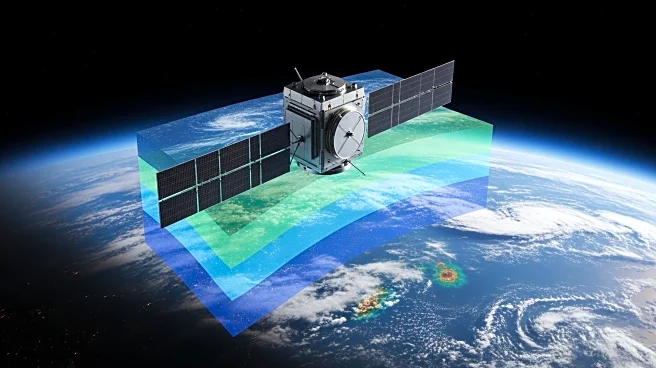
The MASI technology is poised for further development and potential commercialization. Researchers may focus on refining the computational algorithms and exploring additional applications in various industries. The scalability of the system suggests that it could be expanded for use in larger arrays, potentially leading to new imaging solutions in fields such as space exploration and environmental monitoring. As the technology matures, it may attract interest from companies and institutions looking to integrate advanced imaging capabilities into their operations. Continued research and collaboration with industry partners could accelerate the adoption of MASI, paving the way for its widespread use in scientific and industrial applications.