



What's Happening?
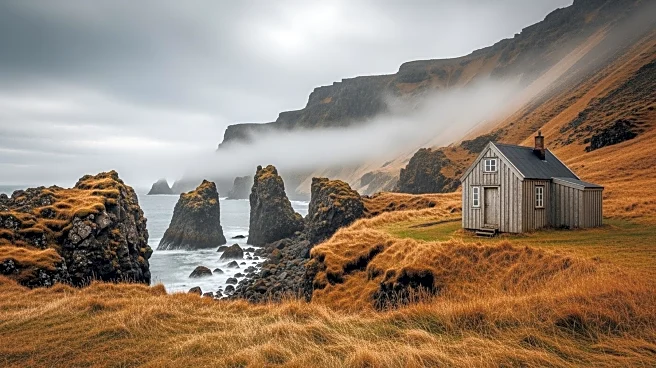
The Icelandic drama 'The Love That Remains,' directed by Hlynur Pálmason, delves into the quiet disintegration of a family set against the backdrop of Iceland's natural beauty. The film follows Anna, an artist, and her estranged husband Magnús, an industrial fisherman, as they navigate their separation. The narrative unfolds without revealing the cause of their rift, focusing instead on the aftermath and the couple's attempts to maintain a semblance of family life. Anna, now without her art studio, works outdoors, while Magnús, often at sea, tries to stay connected with their children. The film is noted for its cinematic visuals that juxtapose serene landscapes with the tumultuous emotional landscape of the characters.
Why It's Important?
The film's exploration
of family dynamics and personal identity amidst the forces of nature offers a poignant reflection on the human condition. It highlights the complexities of relationships and the inevitable changes that come with time and circumstance. By portraying the family's interactions with nature, the film underscores the interconnectedness of human emotions and the environment. This narrative approach may resonate with audiences who appreciate films that prioritize character development and visual storytelling over conventional plot structures. The film's release contributes to the growing interest in international cinema, particularly works that offer unique cultural perspectives.
What's Next?
As 'The Love That Remains' continues its theatrical run, it may garner attention from film festivals and critics, potentially leading to wider international distribution. The film's themes of family and nature could spark discussions among audiences and critics alike, possibly influencing future projects by Pálmason and other filmmakers interested in similar narratives. The film's reception may also impact the visibility of Icelandic cinema on the global stage, encouraging more productions from the region.
Beyond the Headlines
The film's subtle narrative and emphasis on visual storytelling challenge traditional cinematic conventions, offering a fresh perspective on the portrayal of family and nature. Its depiction of the natural world as both a serene and formidable force invites viewers to consider the broader implications of human interactions with the environment. This thematic focus aligns with contemporary discussions on environmental awareness and sustainability, potentially inspiring audiences to reflect on their own relationships with nature.