


What's Happening?
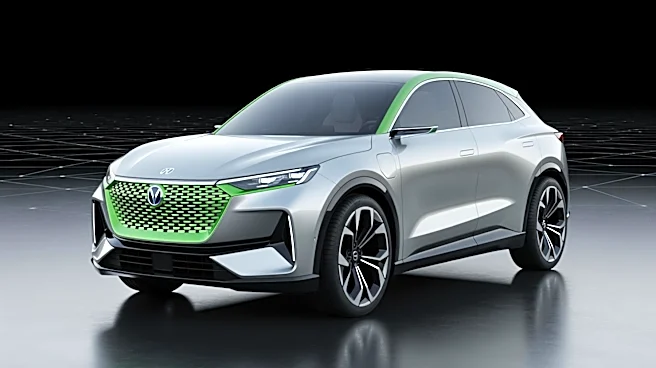
Edmunds, a popular car-shopping website, conducted a series of tests on the Geely Galaxy M9, a Chinese hybrid SUV priced at approximately $25,000. The tests revealed that the vehicle's technology and features are competitive with, and in some cases surpass,
those of more expensive models available in the US. Despite Chinese cars being effectively banned in the US, Edmunds tested the vehicle due to increasing US consumer interest in affordable, feature-rich vehicles. The Galaxy M9, with its extended-range hybrid capabilities, offers a driving range of 808 miles and includes advanced features such as a 30-inch infotainment screen and a built-in fridge. Geely provided the vehicle to demonstrate its technological capabilities, not as an indication of entering the US market.
Why It's Important?
The testing of the Geely Galaxy M9 by Edmunds highlights the growing technological advancements of Chinese automakers, which could pose a significant challenge to US manufacturers. As Chinese vehicles offer high-tech features at lower prices, US consumers may become increasingly frustrated if these options remain unavailable due to regulatory barriers. The situation underscores the need for US automakers to innovate and offer competitive alternatives, especially as the market for electric and hybrid vehicles expands. The potential entry of Chinese vehicles into the US market could disrupt the current automotive landscape, pressuring domestic companies to enhance their offerings.
What's Next?
While Geely has not announced plans to enter the US market, the interest generated by the Galaxy M9 could lead to increased pressure on US automakers to adapt. Major US companies like Ford and Stellantis are already planning to introduce extended-range hybrids as an alternative to slower-selling electric vehicles. The ongoing technological advancements in the Chinese automotive industry may prompt US manufacturers to accelerate their innovation efforts to maintain competitiveness. Additionally, regulatory discussions may arise regarding the potential importation of Chinese vehicles, which could influence future market dynamics.