







What's Happening?
Ube, a purple yam native to the Philippines, is gaining international popularity, particularly in the food and beverage industry. This surge in demand is driven by its vibrant color and mild flavor, making it a trendy ingredient in various products like
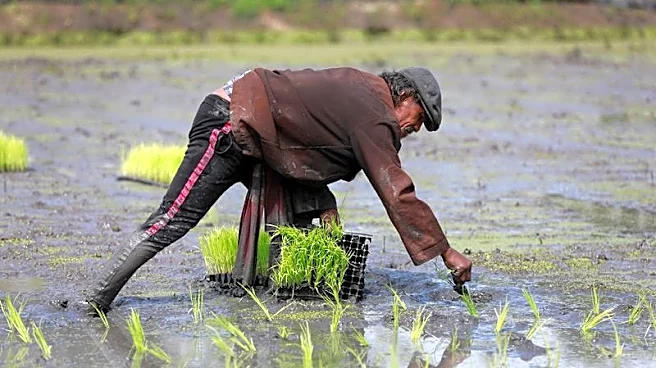
lattes and desserts. However, the supply chain for ube is struggling to keep up with this demand. Farmers in the Philippines face challenges such as long growth periods and lack of financial incentives, leading to a decline in national production. Additionally, the supply chain is complicated by middlemen and a lack of direct market access for farmers. Efforts are being made to increase production and improve market access, but issues like the energy crisis in the Philippines further complicate the situation.
Why It's Important?
The growing demand for ube highlights a significant shift in global food trends, with consumers increasingly seeking unique and visually appealing ingredients. This trend presents opportunities for economic growth in the Philippines, where ube is primarily sourced. However, the current supply chain issues could hinder these opportunities. Farmers are not benefiting proportionally from the increased demand due to the involvement of middlemen and the lack of direct market access. Addressing these challenges could lead to improved economic outcomes for Filipino farmers and help stabilize the supply chain to meet international demand. The situation also underscores the importance of sustainable agricultural practices and fair trade in global food markets.
What's Next?
To address the supply chain challenges, initiatives are underway to increase ube production and improve market access for farmers. The Bohol Ube Project, for example, is working to secure set contract prices for ube exports, providing farmers with more financial security. Additionally, local universities and government agencies are collaborating to develop better planting materials and offer training to farmers. These efforts aim to stabilize the supply chain and ensure that farmers can benefit from the growing global demand for ube. However, the ongoing energy crisis in the Philippines poses a significant challenge, potentially affecting production costs and availability.
Beyond the Headlines
The ube supply chain issues highlight broader themes of globalization and the impact of social media on consumer trends. As ube becomes a global phenomenon, it raises questions about cultural appropriation and the ethical sourcing of ingredients. Ensuring that the benefits of this trend reach the local communities that produce ube is crucial. Additionally, the situation reflects the complexities of modern supply chains, where local challenges can have global repercussions. The energy crisis in the Philippines, for instance, not only affects local farmers but also has the potential to disrupt international markets reliant on ube.