







What's Happening?
Tesla Inc. is experiencing a significant decline in vehicle registrations in California, as reported by the California New Car Dealers Association. In the first quarter, Tesla's registrations dropped by 24% compared to the same period last year. This
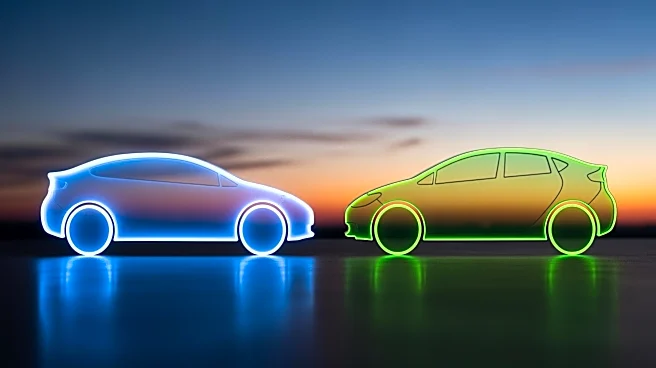
decline is part of a broader trend where electric vehicles (EVs) are losing ground to hybrid vehicles in the state. Currently, zero-emission vehicles account for less than 14% of all new vehicle registrations, while gas-electric hybrids have increased to 21% of the market. Despite the decline, Tesla's Model Y remains the top-selling vehicle in California, followed by the hybrid Toyota Camry. The reduction in federal incentives for EVs has been partially offset by Governor Gavin Newsom's $200 million state subsidy initiative.
Why It's Important?
The shift in consumer preference from electric vehicles to hybrids in California, a major market for EVs, could have significant implications for Tesla and the broader automotive industry. This trend may influence Tesla's market strategy and impact its financial performance. The decline in EV sales could also affect California's environmental goals, as the state has been a leader in promoting zero-emission vehicles. The increase in hybrid vehicle sales suggests that consumers are seeking more versatile and cost-effective options, potentially due to reduced federal incentives for EVs. This shift could prompt other automakers to adjust their production and marketing strategies to align with changing consumer preferences.
What's Next?
Tesla and other EV manufacturers may need to reassess their strategies to regain market share in California. This could involve lobbying for renewed federal incentives or enhancing the appeal of their vehicles through technological advancements or cost reductions. The state government might also consider additional measures to support the adoption of zero-emission vehicles, such as increasing subsidies or investing in charging infrastructure. The automotive industry will likely monitor these developments closely, as California's market trends often influence national and global automotive strategies.