




What's Happening?
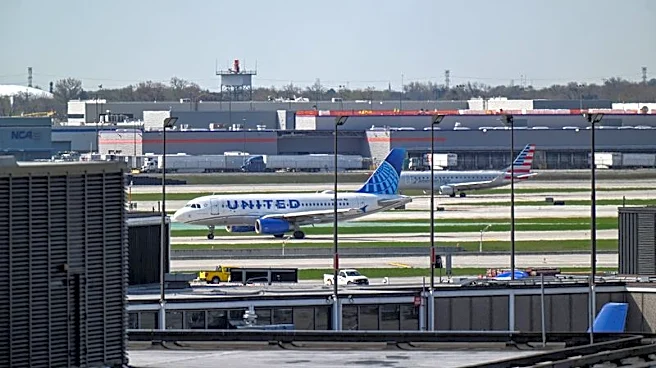
American Airlines has dismissed the possibility of a merger with United Airlines, citing concerns over competition and antitrust laws. The announcement came after United CEO Scott Kirby suggested the merger to the Trump administration, aiming to create
the world's largest airline. The proposed consolidation has raised regulatory scrutiny due to potential market monopoly issues, as the two airlines, along with Delta and Southwest, already control 80% of domestic capacity. A merger would give United and American a 40% domestic share, prompting concerns about reduced competition and higher prices for consumers.
Why It's Important?
The rejection of the merger proposal is significant as it highlights the ongoing regulatory challenges in the airline industry. A merger of this magnitude would reshape the competitive landscape, potentially leading to higher fares and fewer choices for consumers. The decision reflects the administration's stance on maintaining competition and preventing monopolies. It also underscores the importance of antitrust laws in regulating large-scale mergers, ensuring that consumer interests are protected in the aviation sector.
What's Next?
While American Airlines has rejected the merger, the industry may still see consolidation efforts as airlines seek to expand their market share. Regulatory bodies will continue to scrutinize such proposals to ensure compliance with antitrust laws. Airlines may explore alternative strategies to enhance competitiveness, such as partnerships or alliances, without triggering monopoly concerns. The decision may also influence future merger discussions within the industry, setting a precedent for regulatory considerations.