





What's Happening?
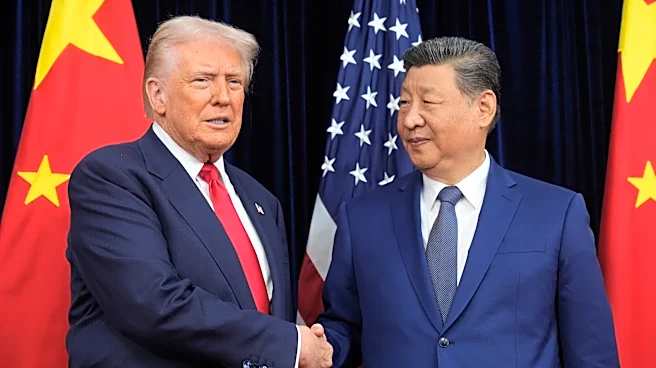
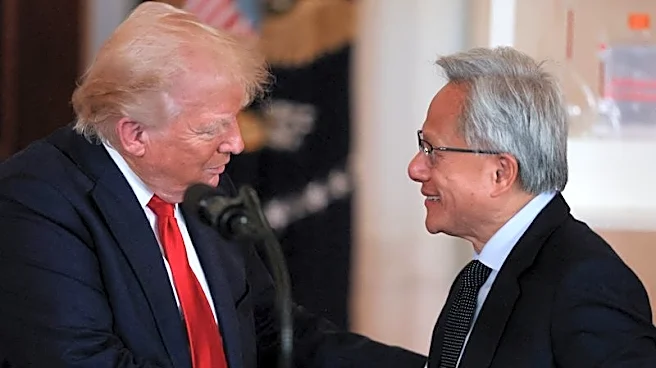
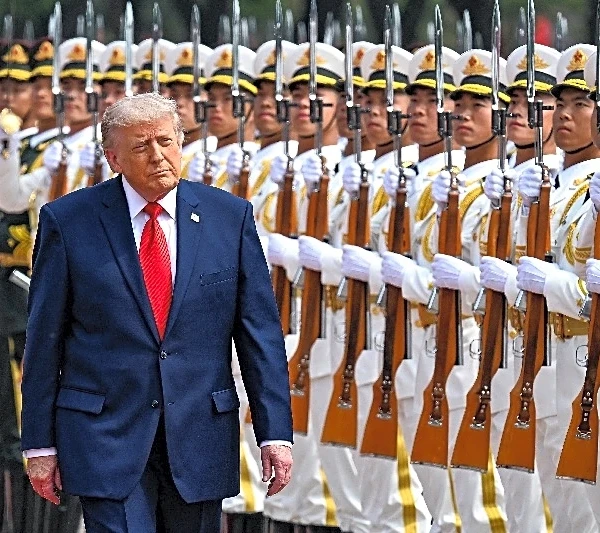
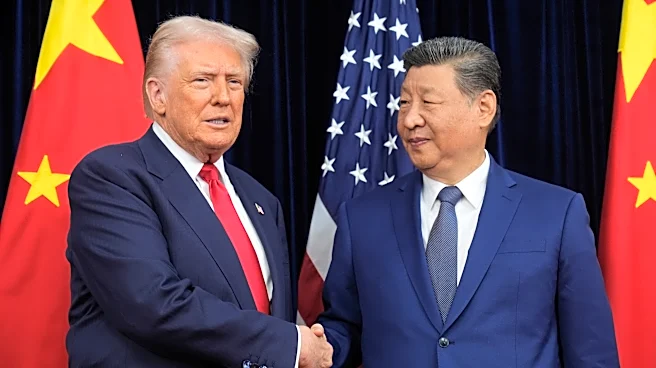
President Trump recently led a delegation of 17 American CEOs to Beijing, with only Tesla CEO Elon Musk and NVIDIA CEO Jensen Huang accompanying him on Air Force One. This move underscores the strategic importance of these two companies in the ongoing
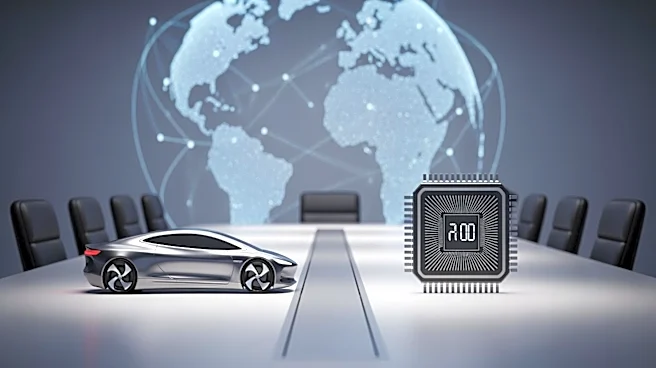
US-China technology rivalry. Huang's inclusion followed extensive lobbying efforts to ease AI chip export restrictions, a critical issue for NVIDIA, which faces a potential $50 billion revenue opportunity if these restrictions are lifted. Meanwhile, Musk's presence is crucial due to Tesla's significant operations in China, including its Shanghai Gigafactory and pending regulatory approvals for its Full Self-Driving technology. The delegation's visit comes at a time when trade policy appears to be increasingly influenced by personal relationships with the President rather than traditional institutional processes.
Why It's Important?
The inclusion of Musk and Huang in President Trump's delegation highlights the pivotal role of private sector leaders in shaping international trade policies, particularly in the tech industry. For NVIDIA, easing export restrictions could unlock substantial revenue streams, while Tesla's operational success in China is heavily dependent on favorable regulatory conditions. This development reflects a shift towards personalized diplomacy, where access to the President can translate into significant competitive advantages. Companies like AMD, Ford, and GM, which lack similar access, may face challenges due to selective regulatory favors. The broader implications for US-China relations are significant, as these interactions could influence future trade negotiations and economic policies.
What's Next?
The outcomes of this delegation's visit could lead to changes in US-China trade dynamics, particularly in the technology sector. If export restrictions are eased, NVIDIA could see a substantial increase in revenue from China, while Tesla may benefit from smoother operations and regulatory approvals. The visit also sets a precedent for how trade policies might be negotiated in the future, potentially prioritizing direct engagement with influential business leaders. Observers will be watching for any policy announcements or shifts in trade relations following this high-profile visit.
Beyond the Headlines
This event underscores the growing influence of major tech companies in international diplomacy and trade policy. The reliance on personal relationships with political leaders raises questions about transparency and fairness in trade negotiations. It also highlights the strategic importance of the tech industry in global economic relations, as companies like Tesla and NVIDIA play crucial roles in the US-China economic landscape. The long-term implications could include a reevaluation of how trade policies are formulated and the role of corporate leaders in shaping international relations.