
What's Happening?
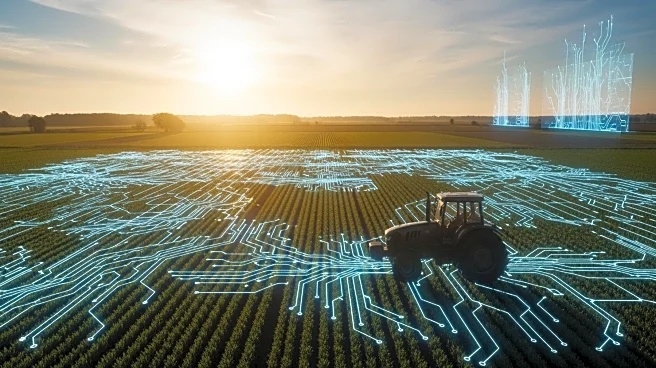
The U.S. farm economy is experiencing a shift as trade uncertainties ease and artificial intelligence (AI) becomes a significant economic driver. With reduced trade tensions and new agreements, market
volatility has decreased, providing a steadier outlook for 2026. AI investments are bolstering economic strength, with corporate earnings and low debt levels supporting resilience. In agriculture, global grain supplies remain ample, but stronger export demand and biofuels production are expected to stabilize prices. The animal protein market is thriving, driven by strong consumer demand and improved feed costs.
Why It's Important?
The easing of trade uncertainties and the rise of AI are reshaping the U.S. farm economy, offering new opportunities and challenges. AI's role in boosting productivity across sectors could lead to significant advancements in agricultural practices and efficiency. The stabilization of trade relations and the potential for reduced tariffs may enhance export opportunities for U.S. farmers. However, the industry must navigate challenges such as fluctuating crop prices and input costs. The focus on AI and trade developments highlights the need for strategic planning and adaptation in the agricultural sector.
What's Next?
As the U.S. farm economy moves into 2026, stakeholders will need to monitor trade developments and AI advancements closely. The potential for further interest rate cuts and federal tax incentives could support economic growth. Farmers may need to make strategic planting decisions based on market conditions and input costs. The continued focus on AI and trade will likely drive innovation and efficiency in the agricultural sector, shaping its future trajectory.