




What's Happening?
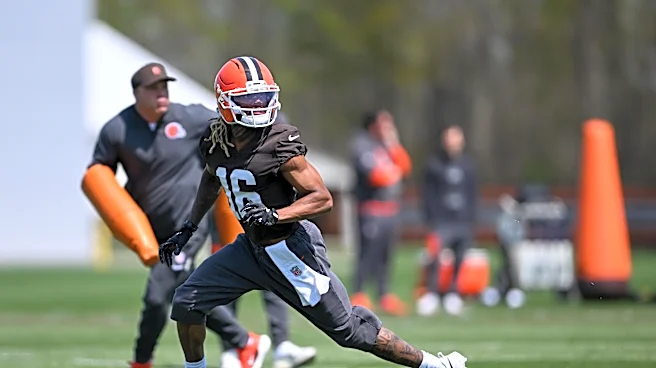
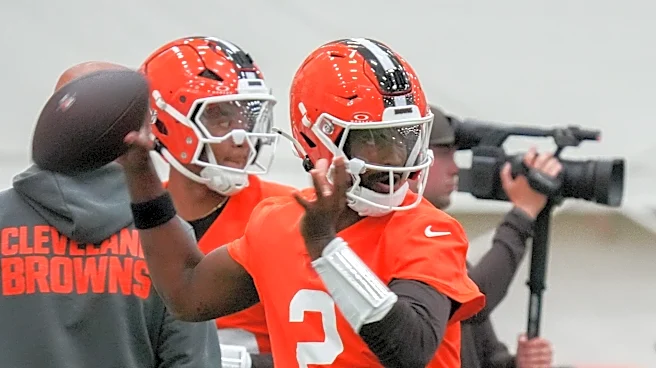
Cleveland Browns quarterback Shedeur Sanders has set a new record by earning $17.7 million in group licensing income, as reported by the NFL Players Association. This figure surpasses the previous record held by Tom Brady, who earned $9.5 million in the 2021-22
season. Group licensing involves deals that include six or more players, commonly seen in products like jerseys and trading cards. Sanders' earnings from group licensing do not include his personal endorsement deals with brands such as Beats by Dre and Gatorade. In his rookie season, Sanders played eight games, starting in seven, and recorded 1,400 passing yards, seven touchdowns, and ten interceptions. He also contributed 169 rushing yards and one rushing touchdown. Fellow rookie Travis Hunter of the Jacksonville Jaguars was the second-highest earner in group licensing with $12.8 million, while Kansas City Chiefs quarterback Patrick Mahomes earned $8 million.
Why It's Important?
Shedeur Sanders' record-breaking earnings highlight the growing financial opportunities available to NFL players through group licensing deals. This development underscores the increasing value of collective player marketing, which can significantly boost a player's income beyond their salary and personal endorsements. The substantial earnings from group licensing reflect the popularity and marketability of NFL players, particularly rookies like Sanders, who have quickly become influential figures in the sports industry. This trend may encourage more players to engage in group licensing agreements, potentially reshaping the financial landscape of professional sports. Additionally, Sanders' success could inspire other athletes to explore similar opportunities, further integrating business acumen into their sports careers.
What's Next?
As group licensing continues to gain traction, it is likely that more NFL players will seek to capitalize on these opportunities. The NFL Players Association may also explore new ways to expand group licensing deals, potentially involving more players and diversifying the types of products available. This could lead to increased competition among players to secure lucrative group licensing agreements. Additionally, brands and companies may look to leverage the popularity of players like Sanders to enhance their marketing strategies, potentially leading to more innovative and collaborative partnerships in the future.