




What's Happening?
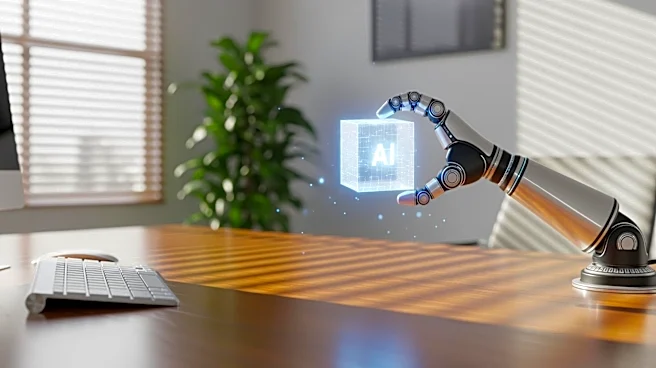
Business Insider's Amanda Hoover conducted an experiment to test the capabilities of AI in performing her job. The AI bot, trained on her work, managed tasks such as conducting interviews and writing stories. This experiment showcased both the potential
and limitations of AI in the workplace. While AI can handle routine tasks, it still lacks the nuanced judgment and creativity of human employees. The experiment reflects a broader trend where companies are increasingly using AI agents to manage tasks, freeing up human employees for more complex responsibilities.
Why It's Important?
The integration of AI in the workplace is reshaping job roles and responsibilities. As AI takes on more routine tasks, employees can focus on higher-value activities, potentially increasing productivity and innovation. However, this shift also raises concerns about job displacement and the need for employees to adapt to new roles. The experiment highlights the importance of understanding AI's capabilities and limitations to effectively integrate it into the workforce. Companies that successfully leverage AI could gain a competitive edge, while those that fail to adapt may struggle to keep up.
What's Next?
As AI continues to evolve, companies may need to invest in training programs to help employees adapt to new roles and responsibilities. There may also be a need for regulatory frameworks to address accountability and ethical concerns related to AI in the workplace. Businesses will likely continue experimenting with AI to find the right balance between automation and human oversight. The future of work will depend on how well companies can integrate AI into their operations while ensuring that employees remain engaged and productive.