





What's Happening?
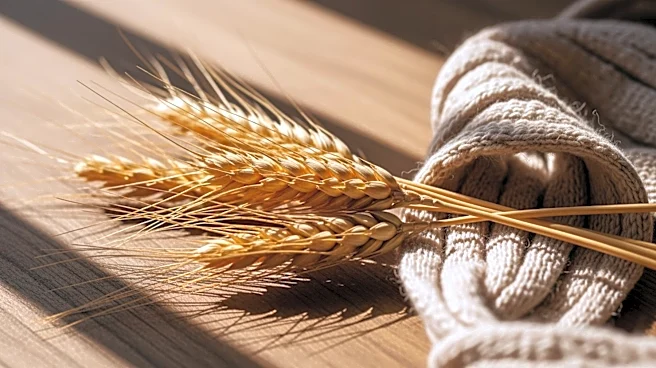
A new report by the environmental nonprofit Canopy reveals the potential of wheat straw as a sustainable alternative to wood-derived pulp for fashion fibers. The report, titled 'From Wheat Straw to Wardrobes: Fashioning a New Fiber Future,' details a pilot
project that tested the viability of using Indian wheat straw to produce viscose and lyocell fibers. The project, known as Project Latvus, involved collaboration with various nonprofits, manufacturers, and brands, including H&M Group and Textile Genesis. The pilot demonstrated that wheat straw lyocell fabric is a viable alternative, particularly for knit and sweater applications, although some production challenges remain.
Why It's Important?
The use of wheat straw as a fiber source presents a significant opportunity to reduce the environmental impact of the fashion industry. Traditional methods of producing viscose and lyocell fibers involve cutting down millions of trees annually, contributing to deforestation and carbon emissions. By utilizing agricultural residues like wheat straw, the industry can decrease its reliance on wood pulp, thereby preserving biodiversity-rich forests and reducing carbon emissions. This shift aligns with global sustainability goals, such as the 30 by 30 biodiversity target, and offers a pathway to a more circular and low-impact textile industry.
What's Next?
Following the successful pilot, Canopy and its partners plan to conduct a techno-economic assessment to evaluate the financial viability of scaling wheat straw-based lyocell production. The next steps include optimizing production processes and working with partners to scale up production. Educating consumers about the benefits of agricultural residue-derived fibers will be crucial for market adoption. The initiative aims to bolster market support and empower consumers to make informed choices, ultimately driving the transition to more sustainable fashion practices.