
What's Happening?
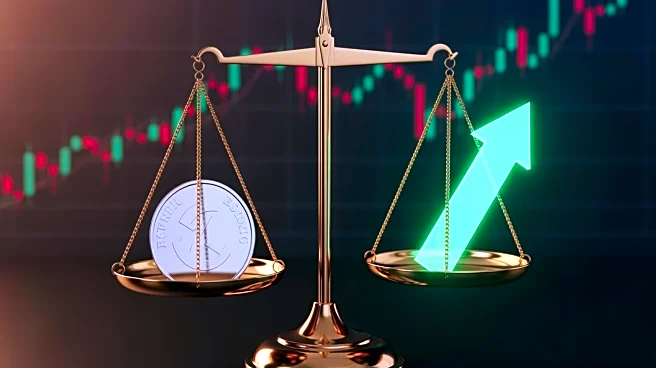
The U.S. stock market is experiencing a resurgence as investors anticipate a rate cut by the Federal Reserve at its final policy meeting of the year. This expectation has led to a reversal of the market's
previous downturn in November, with stocks nearing record highs. The potential rate cut is seen as a response to concerns about a weakening labor market. Lower interest rates can boost stock prices by reducing borrowing costs for individuals and businesses, encouraging spending and investment, and increasing corporate earnings. Additionally, lower rates make stocks more attractive compared to short-term government bonds and cash equivalents. The Russell 2000 index, which includes smaller companies sensitive to interest rate changes, recently hit a record high, highlighting the positive impact of anticipated rate cuts on smaller firms.
Why It's Important?
The Federal Reserve's decision to cut interest rates is significant as it directly influences economic activity by affecting borrowing costs and investment incentives. A rate cut can stimulate economic growth by making it cheaper for businesses to finance operations and expansions, potentially leading to increased employment and higher consumer spending. For investors, lower rates can enhance stock market performance, as seen in the recent rally. This development is particularly beneficial for smaller companies, which often face higher interest expenses. However, the broader economic implications depend on the Fed's future actions, especially if inflationary pressures re-emerge, which could necessitate a more cautious approach to further rate cuts.
What's Next?
The Federal Reserve is expected to release its quarterly summary of economic projections, providing insights into officials' expectations for future interest rate paths. While a rate cut is anticipated this week, the trajectory of further cuts remains uncertain, especially if inflation accelerates. Investors and market analysts will closely monitor the Fed's statements and projections to gauge the likelihood of additional rate adjustments in 2026. The market's response to these developments will be crucial in determining the economic outlook and investment strategies moving forward.