




What's Happening?
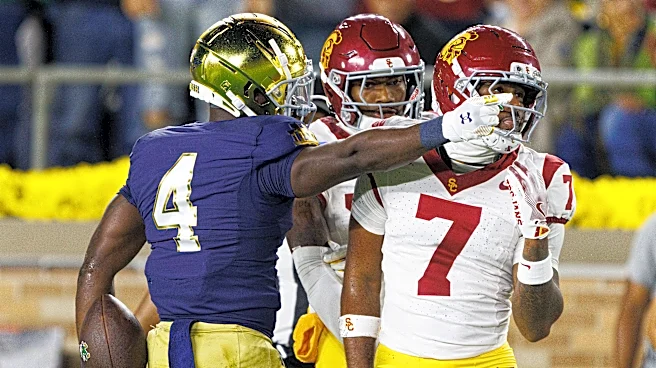
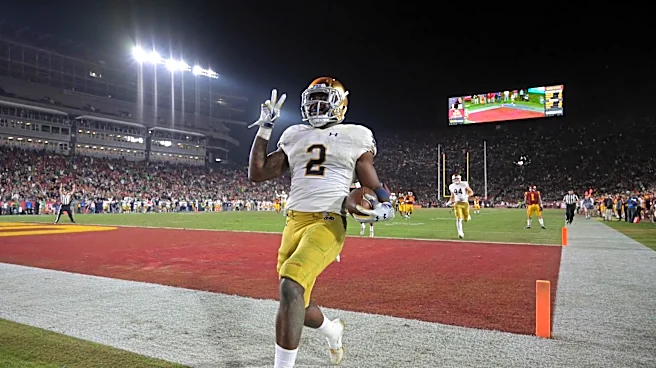
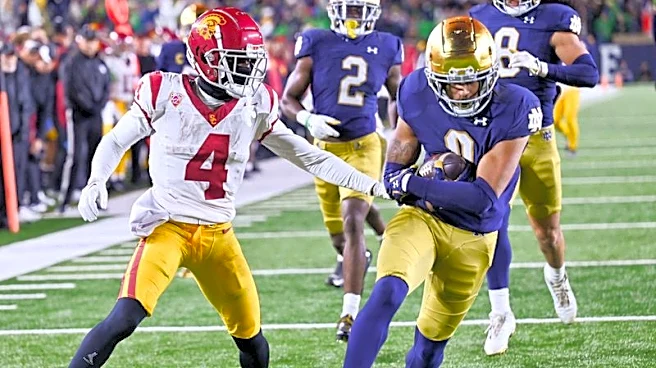
Notre Dame and the University of Southern California (USC) are in discussions to renew their historic football rivalry, which dates back to 1925. The rivalry was temporarily halted when it was announced that the two teams would not face each other in the 2026
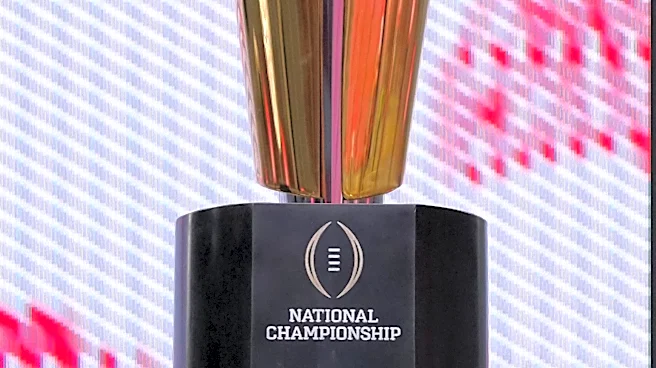
season. Talks are ongoing, with both schools optimistic about reaching an agreement. The main point of contention is the timing of the game. USC prefers to move the game earlier in the season to align with its nonconference schedule, while Notre Dame wants to maintain the traditional late-season slot. The discussions were further complicated when Notre Dame secured a College Football Playoff agreement guaranteeing a playoff berth if they rank in the top 12, leading USC to withdraw its offer. Despite these challenges, both schools are hopeful for a resolution that could see the rivalry resume by the 2030 season.
Why It's Important?
The renewal of the Notre Dame-USC rivalry is significant for college football, as it represents one of the sport's most storied matchups. The rivalry not only draws significant fan interest but also has implications for the schools' athletic programs and financial revenues from ticket sales and broadcasting rights. The potential renewal could enhance the competitive landscape of college football, especially with Notre Dame's playoff agreement adding a new dimension to the rivalry. The outcome of these negotiations could influence scheduling practices and agreements between other major college football programs, setting a precedent for how traditional rivalries are managed in the modern era of college sports.
What's Next?
If an agreement is reached, the Notre Dame-USC rivalry could resume as early as the 2030 season. Both schools will need to navigate their respective scheduling constraints and playoff commitments to finalize the terms. The resolution of this issue may prompt other schools with historic rivalries to reassess their scheduling strategies, particularly in light of playoff implications. Stakeholders, including athletic directors and coaches, will likely continue discussions to find a mutually beneficial solution that honors the tradition of the rivalry while accommodating modern scheduling needs.