



What's Happening?
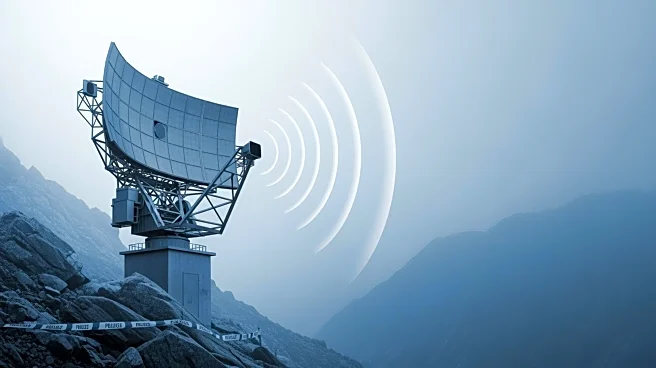
IDS GeoRadar, a division of Hexagon, has introduced the ArcSAR Neo, a groundbreaking Ground-Based Synthetic Aperture Radar (GB SAR) system designed for comprehensive 360° mine slope monitoring. This system is notable for its true 3D resolution, which
provides high-quality, reliable data crucial for effective risk management and safety decisions in mining environments. Unlike traditional systems that convert 2D radar data into 3D models, ArcSAR Neo captures 3D information directly, offering unmatched data clarity and reducing interference from factors like signal multipath or moving equipment. This advancement allows mine operators to make faster, more reliable safety decisions, minimizing unnecessary operational disruptions. The system also features a 360° camera with HDR imaging, synchronized with 3D radar data, to provide valuable visual context for interpreting monitoring data. With an extended monitoring range of up to six kilometers, ArcSAR Neo is designed for rapid deployment and can be set up by a single operator in about fifteen minutes.
Why It's Important?
The introduction of ArcSAR Neo represents a significant advancement in mining safety technology. By providing clearer and more reliable data, the system enhances the ability of mine operators to detect and respond to potential slope failures, thereby reducing the risk of accidents and operational interruptions. This is particularly important as mining operations become more complex and the demand for precise monitoring increases. The system's ability to function on solar energy also highlights a move towards more sustainable mining practices. The enhanced data clarity and confidence provided by ArcSAR Neo support better-informed decision-making, which is crucial for maintaining safety and efficiency in mining operations. This innovation could set a new standard for slope monitoring technology, potentially influencing industry practices and safety regulations.
What's Next?
As ArcSAR Neo becomes available in three configurations—Tactical, Advance, and Performance—it is expected to be adopted by a range of mining operations, from small pits to large open-pit mines. The system's rapid deployment capability and ease of use may encourage widespread adoption, potentially leading to a shift in how slope monitoring is conducted across the industry. Stakeholders in the mining sector, including safety regulators and environmental groups, may closely monitor the system's impact on safety and operational efficiency. Additionally, the emphasis on solar energy use could inspire further innovations in sustainable mining technologies. As the system gains traction, it may prompt other companies to develop similar technologies, fostering competition and further advancements in the field.