



What's Happening?
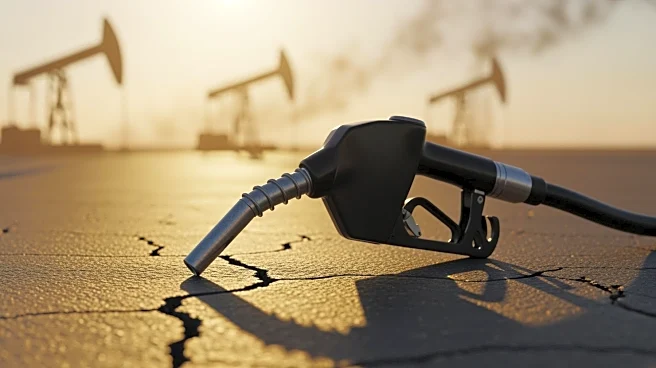
Gas prices in the United States have surged due to escalating tensions in the Middle East, particularly the Iran war, which has caused oil prices to skyrocket. According to AAA, the average price of gasoline has increased to $3.63 per gallon, up from
$2.93 last month. This marks the first time since 2023 that gas prices have exceeded $3 per gallon in every U.S. state. The increase in gas prices is affecting household budgets and influencing various sectors, including gig work and office attendance. Uber and Lyft drivers are becoming more selective about the rides they accept due to the inability to adjust fares in response to rising fuel costs. Meanwhile, electric vehicle (EV) drivers are experiencing a cost advantage as charging costs have not increased in line with oil prices.
Why It's Important?
The rise in gas prices has significant implications for the U.S. economy. Higher fuel costs reduce disposable income for consumers, affecting their spending on other goods and services. This can lead to a slowdown in economic activity. For gig economy workers, particularly those driving for rideshare companies like Uber and Lyft, increased fuel costs without corresponding fare adjustments can reduce earnings and alter work patterns. Additionally, the rise in gas prices is influencing the return-to-office debate, as commuting becomes more expensive, effectively reducing take-home pay for workers. This situation highlights the broader economic vulnerability to fluctuations in oil prices and geopolitical tensions.
What's Next?
If tensions in the Middle East persist, oil prices may continue to rise, further impacting gas prices and the broader economy. Businesses and consumers may need to adjust to sustained higher fuel costs, potentially leading to changes in commuting patterns and consumer behavior. Policymakers might consider measures to mitigate the impact on households and the economy, such as exploring alternative energy sources or providing financial relief to those most affected. The situation also underscores the potential benefits of transitioning to electric vehicles, which could gain more traction as consumers seek to avoid volatile fuel prices.