






What's Happening?
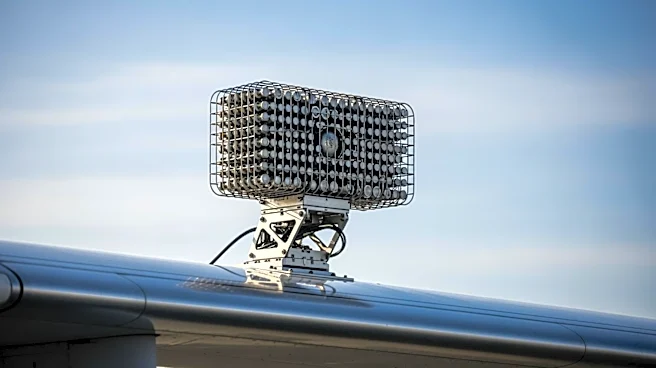
IMSAR LLC has successfully completed the first flight of its NanoSAR D Radar Electronics Assembly (REA), marking a significant advancement in miniaturized airborne radar technology. The NanoSAR D REA serves as the core component of IMSAR's radar systems,
performing essential Radio Frequency (RF) and processing functions across various platforms. This new system builds upon the established NanoSAR C architecture, which is integral to IMSAR's current radar product line. During its inaugural flight, the NanoSAR D demonstrated the capabilities of IMSAR's software-defined architecture, with key signal processing tasks such as pulse generation, filtering, and detection managed through software. According to Larry Moore, President of IMSAR, the NanoSAR D offers a substantial performance increase while reducing the hardware form factor, solidifying IMSAR's position as a leader in the low-SWaP radar market. The successful flight supports IMSAR's development roadmap and facilitates progress on future systems, including the NSP-4 radar and the 360-degree Quad Horizon radar.
Why It's Important?
The successful flight of the NanoSAR D REA is a pivotal development for the radar technology sector, particularly in enhancing the capabilities of unmanned aerial systems (UAS) and manned aircraft. By shifting signal processing functions into software, IMSAR's system increases processing speed and capability while reducing overall Size, Weight, and Power (SWaP). This advancement allows for more efficient and versatile radar systems, which are crucial for defense and security operations. The modular, scalable, and upgradeable nature of IMSAR's radar architecture means that these systems can be adapted to a wide range of airborne platforms, potentially expanding their use in both commercial and military applications. This development not only strengthens IMSAR's market position but also contributes to the broader goal of improving surveillance, intelligence, and reconnaissance capabilities.
What's Next?
Following the successful flight of the NanoSAR D REA, IMSAR is poised to continue its development of advanced radar systems. The company plans to further enhance its radar capabilities with upcoming systems like the NSP-4 radar and the 360-degree Quad Horizon radar. These advancements are expected to provide even greater access to sophisticated radar technology across various airborne platforms. As IMSAR continues to innovate, stakeholders in the defense and security sectors may anticipate improved surveillance and reconnaissance capabilities, potentially leading to increased demand for these systems. Additionally, the integration of software-defined architecture in radar systems could inspire further technological advancements in the industry.
Beyond the Headlines
The development of the NanoSAR D REA highlights the growing trend towards miniaturization and software integration in radar technology. This shift not only enhances performance but also reduces the physical footprint of radar systems, making them more adaptable to different platforms. The emphasis on software-defined architecture reflects a broader movement in technology towards flexibility and scalability, which could have long-term implications for the industry. As radar systems become more sophisticated, ethical considerations regarding surveillance and privacy may arise, prompting discussions on the balance between security and individual rights.