






What's Happening?
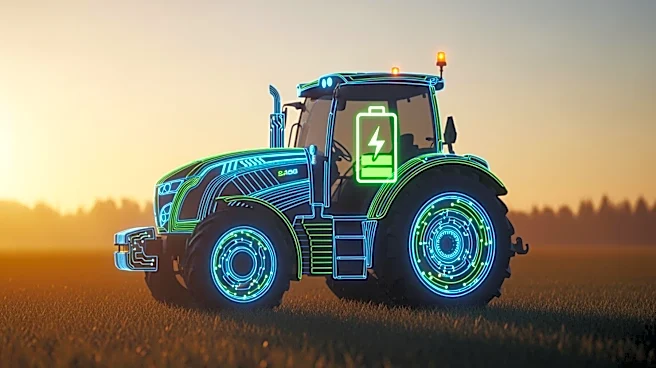
A recent study has focused on the electrification of a 55-kW agricultural tractor, analyzing its load efficiency based on workload data. The tractor, powered by a 55.3-kW diesel engine, was instrumented to measure torque, rotational speed, hydraulic pressure,
and flow rate at major power transmission points. The study aimed to understand the power distribution across the engine, driving axles, PTO shaft, and hydraulic pumps. The tractor's performance was evaluated during various agricultural operations, including plow tillage, rotary tillage, and driving operations. These operations were conducted in a controlled field environment in Korea, using typical farming practices. The study found that the PTO accounted for the majority of the engine load, while the axle load remained low. The research provides insights into the power requirements and load distribution necessary for the potential electrification of agricultural machinery.
Why It's Important?
The study's findings are significant for the agricultural industry, particularly in the context of transitioning to more sustainable farming practices. Electrification of agricultural machinery could lead to reduced emissions and lower operational costs, aligning with global efforts to combat climate change. Understanding the load distribution and power requirements is crucial for designing efficient electric tractors that can meet the demands of modern agriculture. This research could influence future developments in agricultural technology, potentially leading to innovations that enhance productivity while minimizing environmental impact. Stakeholders in the agricultural sector, including equipment manufacturers and farmers, stand to benefit from advancements in tractor electrification.
What's Next?
The next steps could involve further research and development to optimize the design of electric tractors based on the study's findings. Manufacturers may explore integrating advanced battery technologies and energy-efficient components to enhance the performance of electric tractors. Additionally, field trials in diverse agricultural settings could provide more comprehensive data, aiding in the refinement of electric tractor designs. Policymakers might also consider supporting initiatives that promote the adoption of electric agricultural machinery through incentives or subsidies, encouraging a shift towards more sustainable farming practices.
Beyond the Headlines
The electrification of agricultural machinery could have broader implications beyond immediate environmental benefits. It may lead to a shift in the agricultural workforce, requiring new skills and training for operating and maintaining electric equipment. Additionally, the transition could stimulate economic growth in the green technology sector, creating new business opportunities and jobs. The cultural acceptance of electric tractors in traditional farming communities could also play a role in the pace of adoption, highlighting the need for awareness and education initiatives.