





What's Happening?
Telematics and artificial intelligence (AI) are transforming fleet risk management by improving safety and operational efficiency. A panel of experts discussed how these technologies are reshaping the industry, emphasizing the role of connected platforms
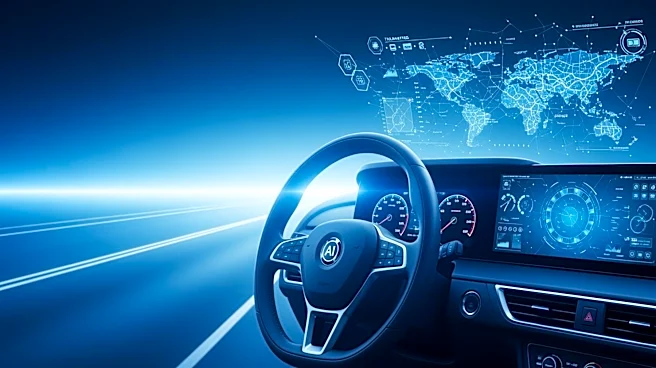
in facilitating communication across organizations. AI-powered driver safety platforms provide insights that inform fleet optimization and maintenance strategies, leading to cross-company benefits. The evolution of telematics from simple GPS tracking to advanced data collection, including in-cab cameras, allows for real-time monitoring of driver behavior. This technological advancement enables better coaching and training, ultimately enhancing safety on the roads.
Why It's Important?
The integration of telematics and AI in fleet management has significant implications for safety and operational efficiency. By providing real-time data and insights, these technologies help organizations reduce risks and improve decision-making processes. The ability to monitor and analyze driver behavior in real-time can lead to fewer accidents and lower insurance costs, benefiting both companies and their employees. Additionally, the use of AI in fleet management supports sustainability efforts by optimizing routes and reducing fuel consumption.
What's Next?
As telematics and AI technologies continue to evolve, their application in fleet management is expected to expand. Future developments may include enhanced claims and litigation processes, as well as improved route detection capabilities. Organizations will need to navigate challenges such as data privacy concerns and the integration of new technologies into existing systems. Building trust with drivers and ensuring compliance with state laws will be critical for successful implementation.