
What's Happening?
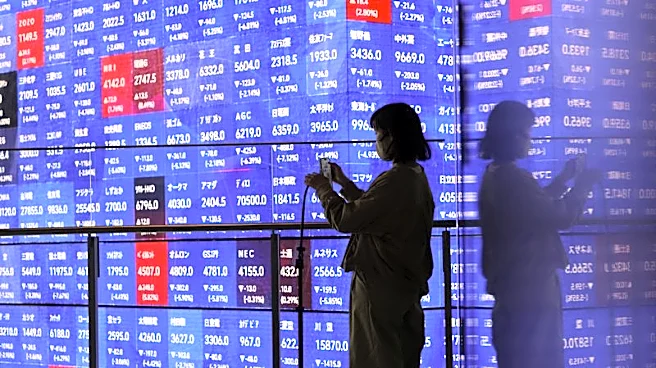
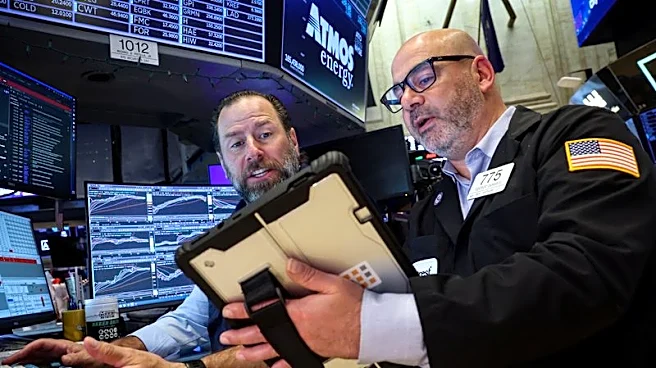
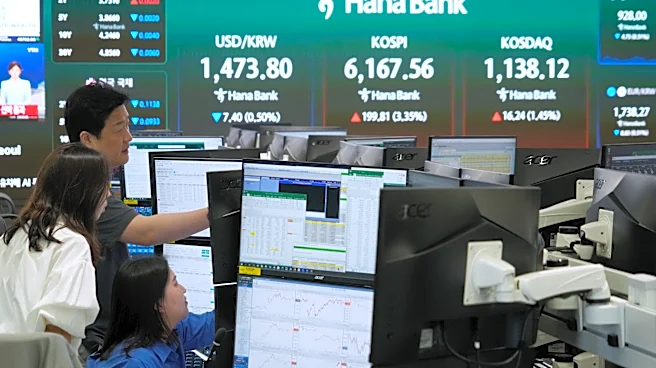
The S&P 500 and Nasdaq Composite have reached new all-time highs as investors remain optimistic about a potential peace deal between the U.S. and Iran. The S&P 500 has risen 3% this week, while the Nasdaq has gained
nearly 5%. This optimism is fueled by President Trump's comments suggesting that the Iran conflict may soon be resolved, with talks potentially resuming in the coming days. The market's positive performance is also supported by declining energy prices, as West Texas Intermediate crude oil and Brent crude have both seen significant price drops. The potential for a diplomatic resolution to the conflict has encouraged investors to re-enter the market, driving up stock prices.
Why It's Important?
The stock market's strong performance amid geopolitical tensions highlights the importance of investor sentiment and the potential impact of diplomatic developments on market dynamics. A resolution to the Iran conflict could lead to a stabilization of oil prices and further market gains, benefiting investors and the broader economy. The market's resilience also reflects confidence in the U.S. economy's ability to withstand external shocks. However, the situation remains fluid, and any setbacks in peace negotiations could lead to renewed volatility. The market's response to geopolitical events underscores the interconnectedness of global markets and the influence of political developments on economic conditions.
What's Next?
The next steps will likely involve continued monitoring of the U.S.-Iran negotiations and their impact on global oil supplies. Investors will be looking for concrete developments in peace talks and any agreements that could stabilize the region. A successful resolution could lead to further market gains and a decrease in energy prices. However, the potential for renewed conflict remains, and any escalation could impact investor sentiment and market performance. Additionally, the market will continue to navigate other economic and geopolitical challenges, such as trade tensions and domestic policy changes, which could influence future market trends.