


What's Happening?
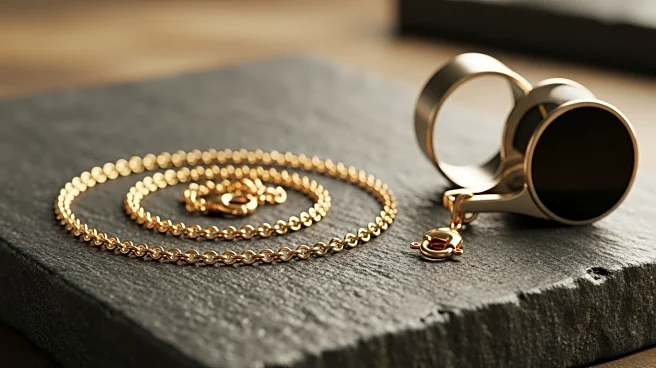
The price of gold has surged significantly, crossing the $5,000 per ounce mark by January 2026, a 162% increase over five years. This rise is attributed to global market instability, with investors turning to gold as a safe-haven asset during periods
of high inflation and a weakening US dollar. This increase in gold prices is impacting jewelry brands, particularly those in the demi-fine segment, which offers high-quality pieces at more accessible prices than high jewelry. Brands are faced with the dilemma of either raising prices or adjusting the karat count of their products to maintain affordability. Some brands, like Ana Luisa, have started offering 10-karat gold pieces, which are less expensive and more durable than higher karat options.
Why It's Important?
The rising cost of gold is reshaping consumer behavior in the jewelry market, particularly affecting the demi-fine segment. As prices increase, consumers are either opting for lower karat gold items or sticking with higher karat pieces, creating a divide in the market. This situation reflects broader economic trends, where discretionary spending is often the first to be affected during economic downturns. Jewelry brands must navigate these challenges by balancing cost and quality to retain their customer base. The shift towards lower karat gold could also influence long-term consumer preferences and brand strategies in the jewelry industry.
What's Next?
Jewelry brands may continue to adjust their offerings to align with consumer preferences and economic conditions. This could involve more frequent price adjustments or further diversification of product lines to include alternative materials. The industry will likely monitor consumer responses closely to these changes, potentially leading to innovations in design and marketing strategies to maintain competitiveness. Additionally, the ongoing economic conditions will play a crucial role in shaping the future dynamics of the jewelry market.