

What's Happening?
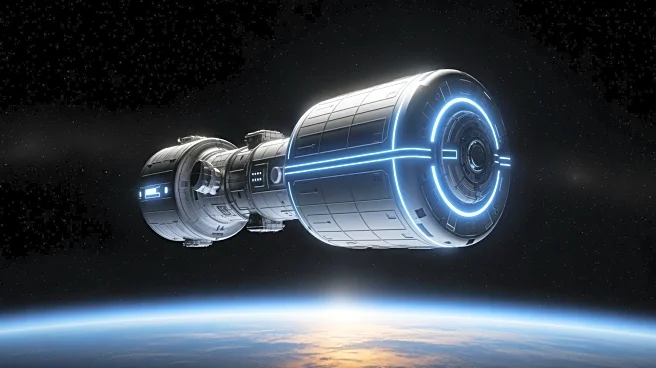
The commercial space station industry is poised for a significant transformation as two U.S.-based companies, Vast and Sierra Space, prepare to launch their own space stations in 2026. Vast plans to launch its Haven-1 station using SpaceX's Falcon 9 rocket, marking the first private space station. Haven-1 will support space tourism and microgravity experiments, serving as a precursor to the larger Haven-2. Meanwhile, Sierra Space is developing the Large Integrated Flexible Environment module, which will be part of the Orbital Reef project with Blue Origin. These developments come as NASA plans to deorbit the International Space Station by 2030, creating a gap that commercial stations aim to fill.
Why It's Important?
The transition to commercial space stations represents
a pivotal shift in space exploration and utilization. By reducing costs and increasing accessibility, these stations could foster a thriving space economy, enabling new industries such as space tourism, manufacturing, and research. The involvement of private companies is expected to drive innovation and competition, potentially leading to more efficient and cost-effective solutions. This shift also aligns with NASA's strategy to focus on deep space exploration while leaving low Earth orbit operations to commercial entities.
What's Next?
As the launch dates approach, both Vast and Sierra Space will continue to refine their technologies and secure partnerships with research institutions and commercial clients. The success of these initial launches will be critical in determining the viability and sustainability of commercial space stations. Additionally, the industry will need to address challenges such as market demand, regulatory frameworks, and international collaboration to ensure long-term success.