

What's Happening?
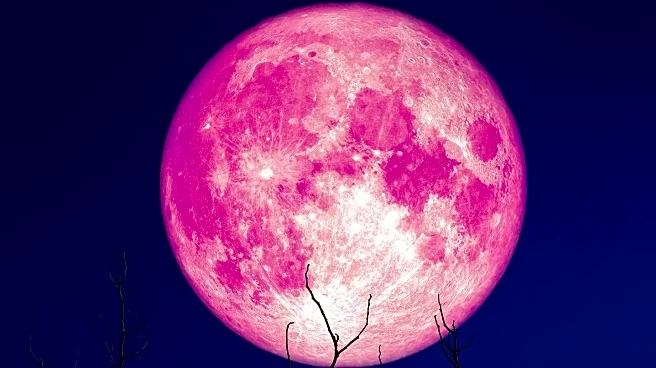
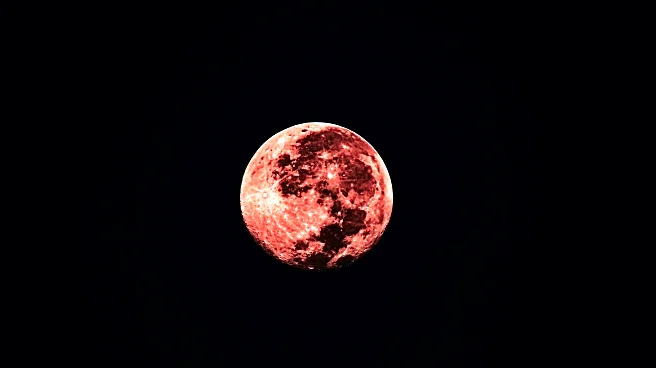
The full 'pink' moon is set to rise on April 1, 2026, offering a unique visual experience due to a phenomenon known as the 'moon illusion.' This event, which is not related to the moon actually turning pink, is named after the early spring bloom of the wildflower
Phlox subulata, commonly known as creeping phlox or moss pink. The moon illusion occurs when the moon appears larger near the horizon than when it is higher in the sky. According to NASA, this optical illusion will make the full moon appear larger to observers. However, rain is expected on the night of the pink moon's rise, potentially obscuring the view for some. The full moon will peak at 10:12 p.m. ET, as noted by the Old Farmer's Almanac.
Why It's Important?
The pink full moon is a significant cultural event, drawing interest from both astronomy enthusiasts and those interested in Native American traditions. The moon's name reflects the cultural heritage of Native American tribes, who have various names for this lunar event, such as the 'Breaking Ice Moon' and 'Moon When the Ducks Come Back.' The moon illusion phenomenon adds a layer of intrigue, as it challenges perceptions and encourages public engagement with astronomical events. This event highlights the intersection of natural phenomena and cultural traditions, fostering a broader appreciation for both science and heritage.
What's Next?
Following the pink moon, the next full moon, known as the 'Flower Moon,' will rise on May 1, 2026. This sequence of lunar events continues to offer opportunities for public engagement and education about astronomical phenomena. Observers and enthusiasts will likely prepare for the upcoming full moons, each with its own cultural significance and potential visual spectacles. The ongoing interest in these events may also inspire educational programs and community gatherings focused on astronomy and cultural heritage.
Beyond the Headlines
The pink moon and its associated cultural names underscore the importance of preserving and respecting indigenous knowledge and traditions. As these events gain attention, there is an opportunity to deepen understanding and appreciation of the diverse cultural narratives that have historically interpreted natural phenomena. This can lead to increased dialogue about the role of traditional ecological knowledge in contemporary society and its potential contributions to environmental stewardship and cultural preservation.