



What's Happening?
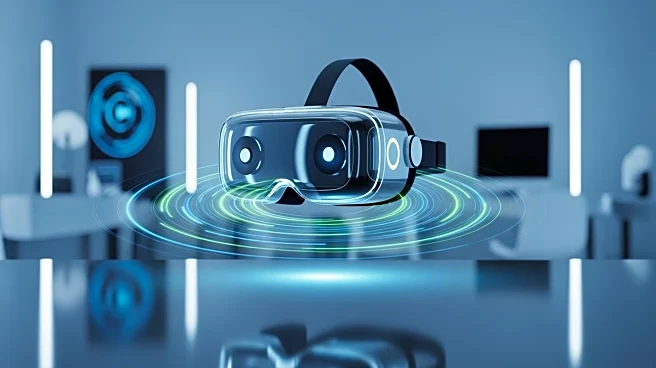
The year 2026 is poised to witness significant advancements in augmented reality (AR) technology, driven by major updates from companies like Apple and Niantic. Apple's Vision Pro updates and Niantic's Lightship platform are pushing AR from experimental
stages into practical applications. These developments are reshaping how developers, studios, and enterprises approach AR, with a focus on integrating AR into daily apps and work environments. Apple's Vision Pro has evolved into a robust developer platform, enhancing productivity and media experiences through improved hardware and software. Meanwhile, Niantic's expansion of its Lightship platform and acquisition of WebAR tools are enabling AR experiences on billions of devices without the need for app installations. This shift is expected to lead to more location-based and WebAR activations in public events and retail settings.
Why It's Important?
The advancements in AR technology are significant for several reasons. For businesses, the integration of AR into workplace applications can enhance productivity and open new revenue streams. The ability to deploy AR experiences without app installations lowers the barrier for entry, making it easier for brands to engage with consumers through viral AR campaigns. For developers, the focus on cross-platform tooling and WebAR pilots offers a more sustainable approach to AR product development, reducing duplication and streamlining operations. These changes are likely to drive early enterprise deals and creative experiments, positioning AR as a key component in future digital strategies.
What's Next?
As AR technology continues to evolve, we can expect to see broader user trials and increased adoption across various industries. Companies are likely to pilot AR applications in logistics, retail analytics, and elder care, leveraging the expanded capabilities of enterprise camera platforms and app stores. The focus on cross-platform development will enable more seamless integration of AR into existing workflows, encouraging further innovation and experimentation. As consumer interest grows, the market for AR hardware and software is expected to expand, with companies investing in premium content and immersive experiences.
Beyond the Headlines
The rise of AR technology also raises important ethical and cultural considerations. As AR becomes more integrated into daily life, issues related to privacy, data security, and algorithmic bias will need to be addressed. The potential for AR to transform storytelling and media consumption also presents opportunities for new forms of artistic expression and cultural engagement. However, the high cost of premium AR hardware may limit accessibility, highlighting the need for more affordable solutions to ensure widespread adoption.