







What's Happening?
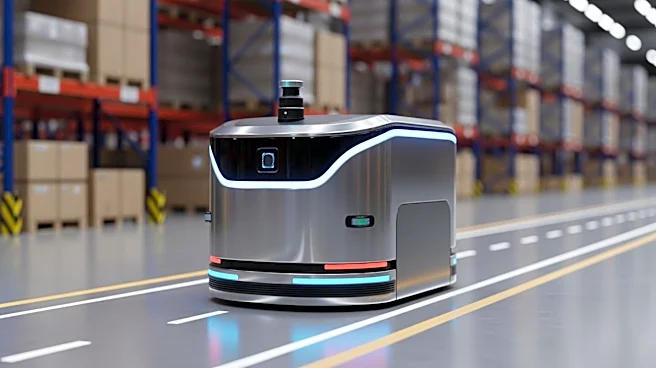
Evri Group, a leading parcel delivery company in the UK, is trialing two automated guided vehicles (AGVs) at its Rugby hub. This initiative marks a significant step in the company's efforts to integrate robotics into its operations. The AGVs are designed
to transport loads of up to 1.5 tonnes, using LiDAR technology to navigate routes within the hub. This trial follows successful tests of a robotic delivery dog and ongoing autonomous delivery trials in Barnsley. The introduction of AGVs aims to redistribute existing workers to more productive tasks and upskill them as robot handlers. The company is focused on exploring how robotics can support its hub and depot operations, enhancing efficiency and reducing monotonous tasks for employees.
Why It's Important?
The trial of AGVs by Evri Group is a significant development in the logistics industry, highlighting the growing role of automation and robotics in enhancing operational efficiency. By integrating AGVs, Evri aims to streamline its logistics processes, reduce manual labor, and improve productivity. This move is part of a broader trend towards automation in the logistics sector, driven by the need to handle increasing parcel volumes and improve service delivery. The adoption of robotics not only enhances operational efficiency but also provides opportunities for workforce upskilling, as employees transition to roles that involve managing and maintaining robotic systems. This shift is likely to have a positive impact on the logistics industry, setting a precedent for other companies to follow.
What's Next?
As Evri Group continues to explore the integration of robotics into its operations, further trials and implementations of AGVs and other robotic solutions are expected. The company plans to assess the impact of these technologies on its logistics processes and employee productivity. If successful, the trial could lead to a broader rollout of AGVs across Evri's operations, potentially transforming the way the company handles parcel deliveries. The logistics industry as a whole may see increased adoption of similar technologies, as companies seek to enhance efficiency and remain competitive in a rapidly evolving market. The focus on innovation and automation is likely to drive further advancements in logistics technology, benefiting both companies and consumers.