







What's Happening?
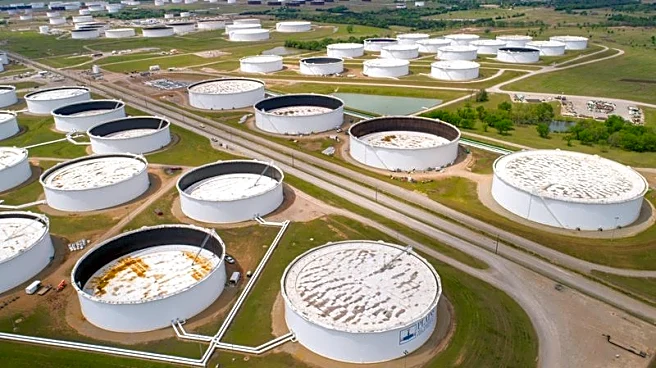
The U.S. Energy Information Administration (EIA) reported a decrease in U.S. crude oil inventories by 7.2 million barrels for the week ending June 5, bringing stockpiles to 426.5 million barrels, which is 5% below the five-year average. This decline follows
a report from the American Petroleum Institute (API) indicating a draw of 9.119 million barrels. The reduction in inventories is attributed to increased refinery runs, with total motor gasoline inventories rising by 200,000 barrels. Meanwhile, distillate inventories decreased by 200,000 barrels, with production averaging 5.2 million barrels daily. The total products supplied, a proxy for U.S. oil demand, averaged 20.6 million barrels per day over the last four weeks, marking a 3.5% increase compared to the same period last year.
Why It's Important?
The decline in U.S. oil inventories signals a tightening supply in the market, which could lead to higher oil prices. This is significant for the U.S. economy as it impacts fuel prices, consumer spending, and inflation. The increase in refinery runs suggests strong demand for refined products, which could benefit U.S. refiners and support economic growth. However, the decrease in distillate inventories, which are 13% below the five-year average, could pose challenges for industries reliant on diesel and heating oil. The data also reflects broader trends in global oil markets, where supply constraints and geopolitical factors continue to influence prices.