


What's Happening?
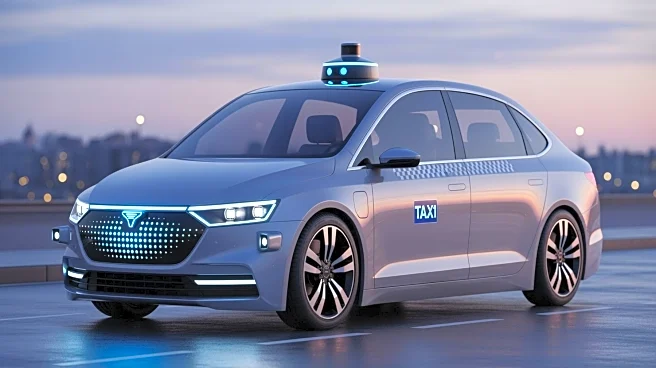
Travis Kalanick, former CEO of Uber, has stated that Waymo is currently leading the race in the development and deployment of robotaxis, surpassing Tesla. Waymo, backed by Google, has expanded its driverless ride-hailing services to ten U.S. cities, while
Tesla operates robotaxis with safety monitors in Austin and a non-autonomous service in San Francisco. Kalanick noted that Tesla is pursuing a vision-based autonomous driving system, which is technically challenging but cheaper to scale compared to Waymo's sensor-based approach. He described Tesla's efforts as chasing a 'ChatGPT moment' in autonomous driving, emphasizing the ambitious nature of Tesla's goals.
Why It's Important?
The competition between Waymo and Tesla in the robotaxi market is crucial for the future of autonomous transportation. Waymo's lead in operational cities suggests a stronger position in scaling its services, potentially influencing market dynamics and consumer adoption of autonomous vehicles. Tesla's approach, while innovative, faces technical hurdles that could delay widespread implementation. The success of either company could shape the regulatory landscape for autonomous vehicles and impact investment in related technologies. As the industry evolves, stakeholders, including investors and policymakers, are closely monitoring these developments to assess the viability and safety of autonomous transportation solutions.
What's Next?
Waymo's continued expansion into new cities indicates its commitment to scaling its robotaxi services, which could lead to increased market share and consumer trust. Tesla's focus on vision-based systems may require further technological advancements and testing to achieve its goals. The competition may drive innovation and improvements in autonomous vehicle technology, potentially leading to collaborations or strategic partnerships. Regulatory bodies may also play a role in shaping the future of autonomous transportation, ensuring safety standards and addressing public concerns. The ongoing developments in this sector are likely to influence investment strategies and technological research in autonomous driving.