



What's Happening?
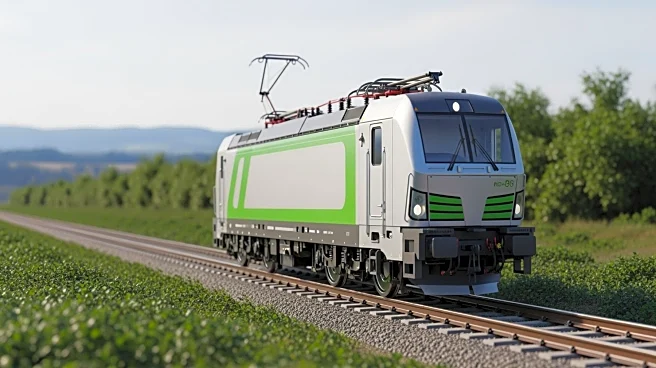
Alpha Trains and Lineas have signed a lease agreement for two Stadler EURO9000 locomotives to enhance sustainable rail freight operations on the Rhine Alpine corridor. The EURO9000 locomotives, known for their hybrid traction capabilities, will support
lower emission freight services across Europe. This agreement is part of Alpha Trains' strategic investment in modern, energy-efficient traction, with the first unit expected to be delivered in March 2026. The locomotives will operate under a full-service lease model, with maintenance provided by Stadler Rail Services.
Why It's Important?
This development is significant for the rail freight industry as it underscores a shift towards more sustainable and efficient transportation solutions. The use of hybrid locomotives like the EURO9000 can reduce emissions and improve operational flexibility, particularly in regions with mixed electrified and non-electrified infrastructure. This move aligns with broader environmental goals and regulatory pressures to lower carbon footprints in transportation. The project also benefits from substantial funding from the German Federal Ministry of Transport, highlighting governmental support for sustainable transport initiatives.
What's Next?
The deployment of EURO9000 locomotives is expected to enhance freight services in Germany and across Europe, potentially leading to increased adoption of hybrid traction technology in the rail industry. As the first units are delivered and integrated into operations, stakeholders will likely monitor performance and environmental impact closely. The success of this initiative could encourage further investments in similar technologies, fostering innovation in sustainable rail transport. Additionally, the collaboration between Alpha Trains and Lineas may serve as a model for other partnerships aiming to achieve greener logistics solutions.
Beyond the Headlines
The introduction of hybrid locomotives could have long-term implications for the rail industry, including shifts in infrastructure development to support new technologies. This initiative may also influence policy-making, encouraging more robust support for sustainable transport solutions. Furthermore, the project highlights the importance of international cooperation in addressing environmental challenges, as it involves cross-border freight operations. The success of such initiatives could pave the way for broader adoption of alternative propulsion technologies in other sectors.