



What's Happening?
Major US food companies, including PepsiCo, General Mills, Kraft Heinz, Conagra Brands, and JM Smucker, are adjusting their pricing strategies in response to a more competitive and price-sensitive grocery market. After years of price increases, these
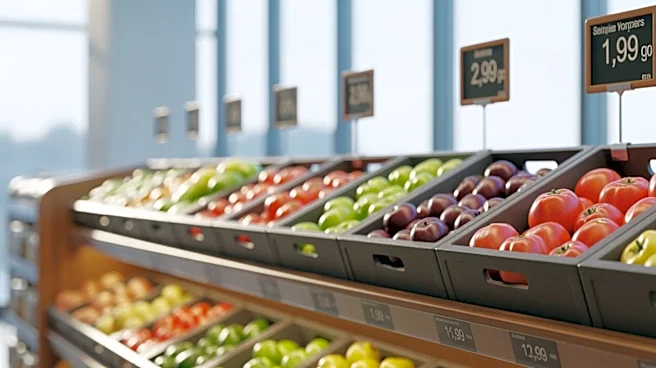
companies are now reducing prices and increasing promotional activities. This shift is not a strategic pivot but a tactical response to consumer resistance and increased competition from private labels and emerging brands. The US grocery environment has seen a consistent pressure across categories, with consumers recalibrating their value reference points and retailers strengthening their private label offerings.
Why It's Important?
The adjustments by these major food companies highlight a significant shift in the US grocery market dynamics. The reliance on price increases as a primary growth engine during the inflationary period has revealed structural limits in pricing power. As consumers increasingly turn to private labels and emerging brands, legacy brands face a narrowing strategic space. This development underscores the need for these companies to rethink their differentiation strategies beyond pricing, focusing on innovation, brand positioning, and value architecture to maintain competitiveness.
What's Next?
Legacy brands are likely to continue exploring ways to stabilize volume and defend shelf space. However, the broader challenge remains in redefining competitive advantage beyond pricing. Companies may need to invest in innovation and brand differentiation to adapt to the evolving market landscape. Retailers will play a crucial role in this dynamic, as effective pricing is increasingly negotiated at the shelf level rather than set by brand strategy alone. The ongoing adjustments may provide temporary relief, but a more strategic reset is necessary for long-term sustainability.