

What's Happening?
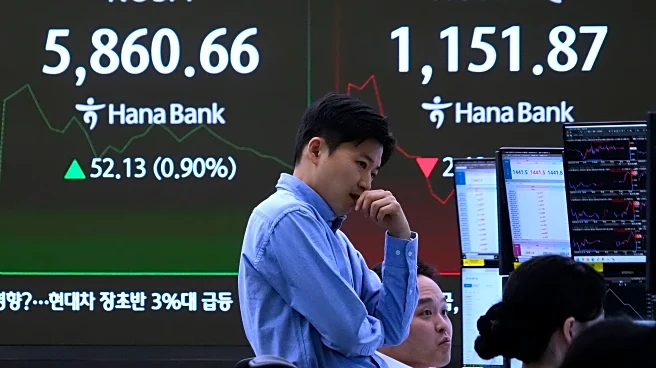
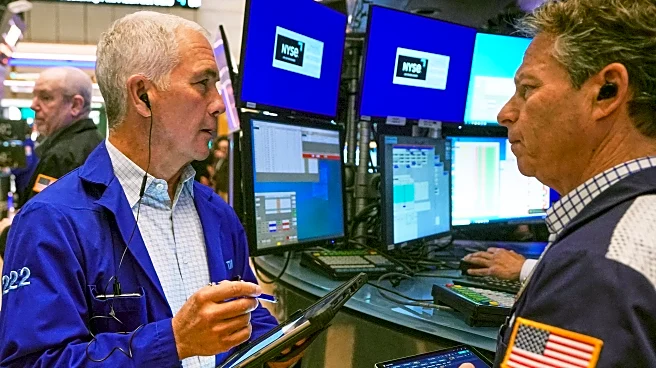
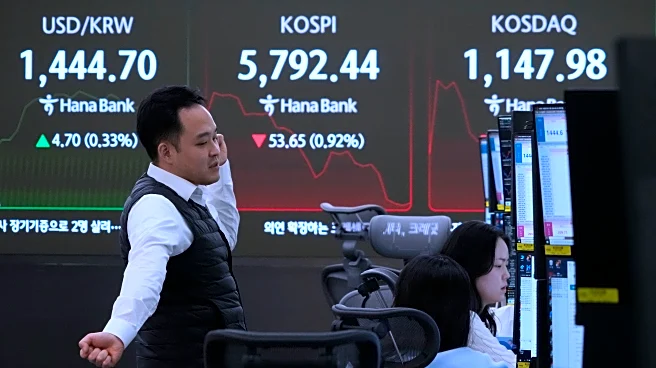
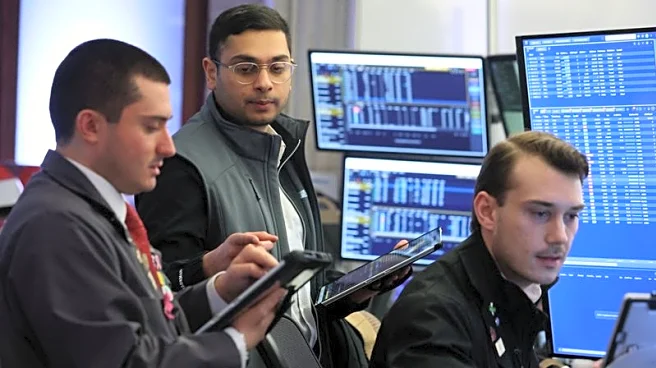
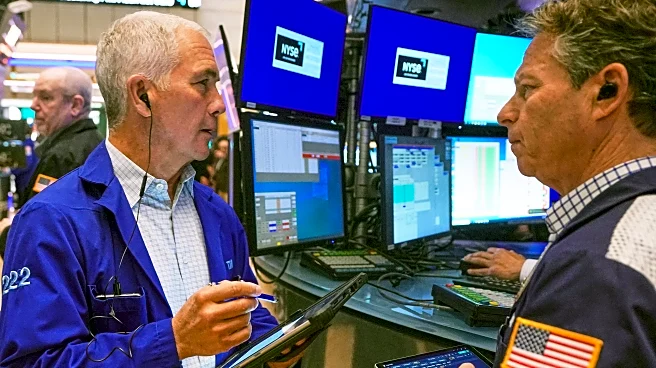
Stock futures remained nearly flat on Monday night following a turbulent start to the final week of February's trading. The Dow Jones Industrial Average futures added 45 points, while S&P 500 and Nasdaq 100 futures each gained 0.1%. Earlier in the day, major stock indexes experienced significant declines due to renewed concerns over artificial intelligence disruptions across various industries. Additionally, President Trump's threat to increase global tariffs to 15% and ongoing tensions between the U.S. and Iran contributed to market unease. The Dow closed down by nearly 822 points, or about 1.7%, with IBM shares dropping approximately 13%. The Nasdaq Composite fell by 1.1%, and the S&P 500 decreased by 1%, slipping into negative territory for
the year. Notable losses were seen in software and cybersecurity stocks, as well as financial sector names.
Why It's Important?
The current market volatility highlights the significant impact of geopolitical tensions and technological disruptions on investor sentiment. President Trump's tariff threats could lead to increased costs for businesses and consumers, potentially slowing economic growth. The anxiety surrounding AI disruptions reflects broader concerns about the rapid pace of technological change and its implications for various industries. The decline in tech and financial stocks underscores the market's sensitivity to these factors. As these sectors are crucial drivers of economic growth, their performance can significantly influence overall market trends. Investors are closely monitoring upcoming earnings reports from major companies like Nvidia, Salesforce, and Snowflake, which could provide further insights into the health of the tech sector.
What's Next?
Traders are looking ahead to a key event hosted by AI firm Anthropic, which is expected to announce new products and features. This event could further influence market dynamics, particularly in the tech sector. Additionally, investors are awaiting consumer confidence data and earnings reports from Home Depot, which could offer clues about consumer spending trends. The market's response to these developments will be critical in determining whether the current pullback is a temporary correction or indicative of a more prolonged downturn. Analysts suggest that a tech-led recovery is necessary for the market to regain momentum, emphasizing the importance of upcoming earnings results in shaping investor expectations.