



What's Happening?
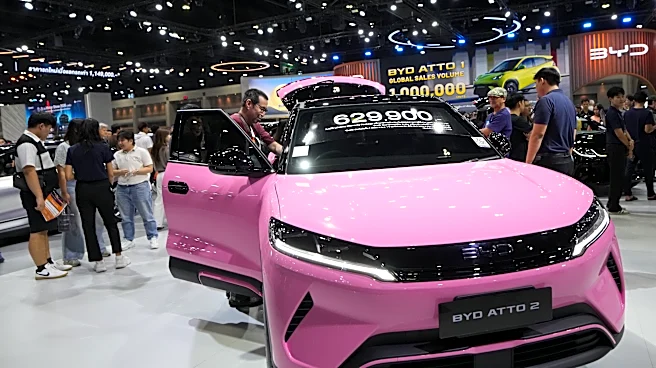
Chinese electric vehicle manufacturer BYD has overtaken Tesla as the world's leading seller of fully electric vehicles. This development comes despite the U.S. market being largely inaccessible to Chinese car companies due to protective tariffs. BYD's
success is attributed to China's long-term investments in innovation within the electric vehicle sector. The company, whose name stands for 'Build Your Dreams,' has capitalized on these investments to expand its market share globally, surpassing Tesla in sales last year.
Why It's Important?
The rise of BYD as the top seller of electric vehicles highlights the growing influence of Chinese manufacturers in the global automotive industry. This shift could have significant implications for American automakers, who may face increased competition from Chinese companies. Protective tariffs that currently limit Chinese access to the U.S. market could potentially hinder American companies' ability to compete globally if these tariffs lead to retaliatory measures or restrict access to innovative technologies. The success of BYD underscores the importance of investment in innovation and could prompt U.S. automakers to reassess their strategies in the electric vehicle market.
What's Next?
As BYD continues to expand its global presence, American automakers may need to adapt to the changing competitive landscape. This could involve increasing investments in research and development to enhance their electric vehicle offerings. Additionally, policymakers might reconsider the impact of tariffs on the automotive industry, balancing protectionism with the need to foster innovation and competitiveness. The evolving dynamics in the electric vehicle market could lead to strategic partnerships or collaborations between U.S. and Chinese companies to leverage technological advancements.
Beyond the Headlines
The success of BYD in surpassing Tesla also reflects broader trends in international trade and economic policy. China's focus on innovation and technology development has positioned its companies as formidable competitors in various sectors, including automotive. This development may influence global trade negotiations and economic policies, as countries seek to balance protectionism with the benefits of open markets. The rise of Chinese electric vehicle manufacturers could also impact environmental policies, as increased competition may accelerate the transition to sustainable transportation solutions.