






What's Happening?
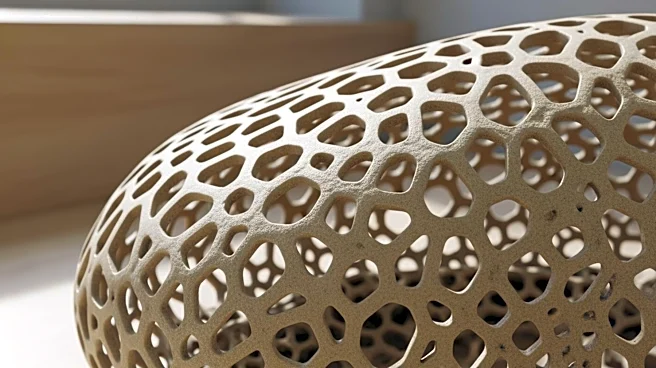
Researchers at Chalmers University of Technology in Sweden have developed a yeast-based 3D printed biomaterial that could revolutionize sustainable interior design. The material, which is made from renewable resources, can be used to create lightweight
architectural pieces such as wall panels and room dividers. Unlike traditional materials like concrete and plastic, this biomaterial minimizes waste and can potentially utilize industrial byproducts. The study, published in the journal Frontiers of Architectural Research, highlights the material's ability to alter its properties through changes in its recipe and printing pattern. However, further research is needed to improve its durability and scalability before it can be widely used in real-world applications.
Why It's Important?
The development of this yeast-based biomaterial represents a significant step towards more sustainable building practices. As the construction industry seeks to reduce its environmental impact, materials that are both renewable and biodegradable are becoming increasingly important. This innovation could lead to a reduction in the use of fossil fuel-derived products in interior design, thereby decreasing the industry's carbon footprint. Additionally, the ability to customize the material's properties could offer designers new creative possibilities while maintaining environmental responsibility. The success of such materials could encourage further investment and research into sustainable building technologies.
What's Next?
Before this biomaterial can be implemented in real-world construction, researchers need to address several challenges, including improving the precision of 3D printing techniques and ensuring the material's stability over time. There is also a need to explore its long-term durability and how it interacts with environmental factors such as moisture. If these hurdles can be overcome, the material could become a viable alternative for various interior design applications, potentially influencing industry standards and practices. The research team is likely to continue refining the material and exploring its potential uses in collaboration with industry partners.