






What's Happening?
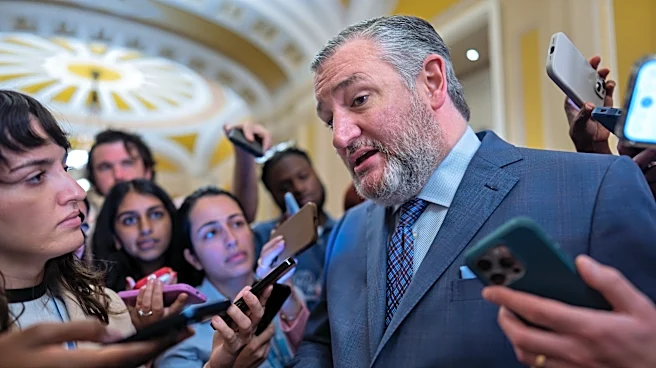
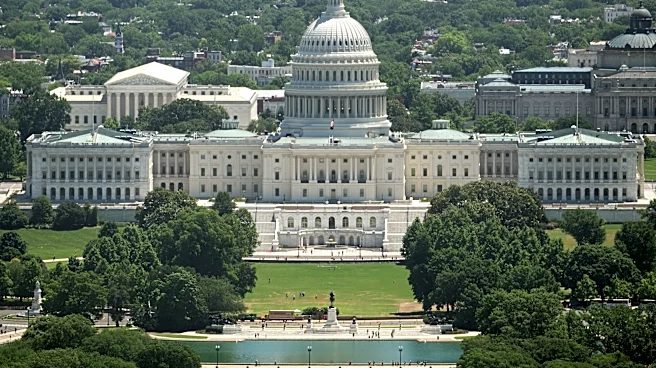
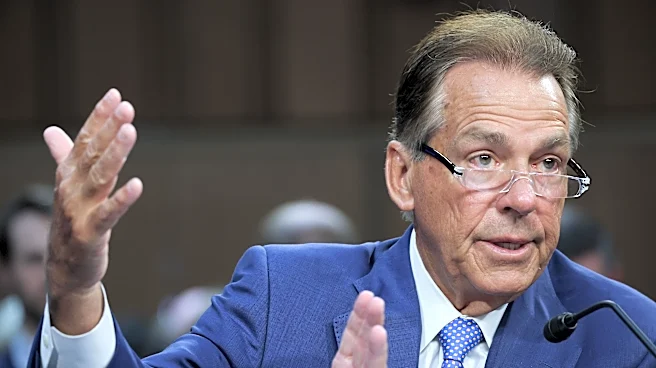
A bipartisan group of U.S. senators is advocating for swift legislative action to reform the college athletics system, which they argue is financially unsustainable and detrimental to student-athletes. During a Senate Commerce Committee hearing, Senators
Ted Cruz and Maria Cantwell highlighted the urgent need for a new framework to address the financial challenges facing college sports. The proposed legislation aims to establish nationwide rules for student-athletes to earn money from their name, image, and likeness (NIL), and to create a revenue-sharing system. However, the bill has faced criticism from major conferences like the SEC and Big 10, which argue that it does not adequately address the complexities of state laws and could increase litigation. The bill also seeks to prevent the formation of superconferences, which could further concentrate resources among a few elite schools.
Why It's Important?
The proposed reforms are significant as they aim to stabilize the financial landscape of college sports, which has been strained by the NIL era and rising costs. The legislation could impact thousands of student-athletes by providing a more equitable distribution of resources and opportunities. It also addresses concerns about the sustainability of non-revenue-generating sports, which have seen significant cuts in recent years. The outcome of this legislative effort could reshape the future of college athletics, affecting universities, athletes, and the broader sports industry. The involvement of Congress is crucial, as it is the only body capable of granting the necessary antitrust exemptions to enforce new rules.
What's Next?
The Senate Commerce Committee is expected to mark up the bill soon, with potential amendments to address concerns raised by major conferences and other stakeholders. The legislative process will involve negotiations to balance the interests of various parties, including student-athletes, universities, and athletic conferences. If passed, the bill could lead to significant changes in how college sports are governed and funded. The outcome will likely influence future discussions on the role of college athletics in higher education and its alignment with educational values.
Beyond the Headlines
The debate over college sports reform touches on broader issues of equity and fairness in higher education. The financial pressures on college sports programs reflect larger economic challenges facing universities, including the need to balance commercial interests with educational missions. The proposed legislation also raises questions about the role of student-athletes as potential employees and the implications for labor rights and compensation. As the landscape of college sports evolves, stakeholders will need to consider the ethical and cultural dimensions of these changes.