







What's Happening?
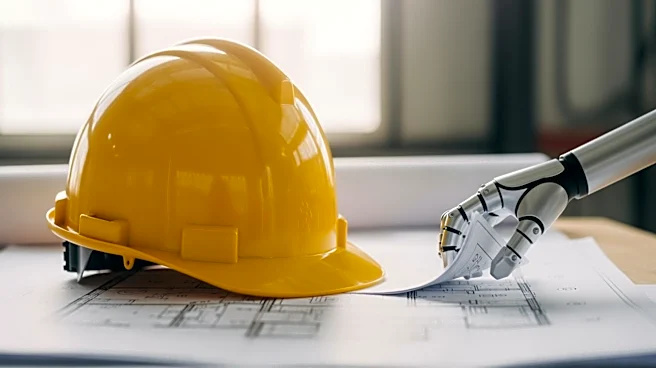
Local trade unions in New York have reported a significant increase in interest for careers in the construction industry. According to CBS News New York's Elle McLogan, this surge in interest is potentially influenced by advancements in artificial intelligence
(AI). The construction sector, traditionally reliant on manual labor, is experiencing a transformation with the integration of AI technologies, which may be attracting individuals seeking new career opportunities. The report highlights that the construction industry is becoming more appealing due to the evolving nature of the work, which now includes more technologically advanced roles. This shift is seen as a response to the growing demand for skilled labor in a sector that is crucial for infrastructure development.
Why It's Important?
The increased interest in construction careers is significant for several reasons. Firstly, it addresses the labor shortage in the construction industry, which is vital for maintaining and developing infrastructure. The integration of AI in construction not only modernizes the industry but also creates new job opportunities that require different skill sets, potentially leading to higher wages and better working conditions. This trend could also influence educational institutions to adapt their programs to prepare students for these emerging roles. Additionally, the shift towards AI-driven construction practices may enhance efficiency and safety, ultimately benefiting the economy by reducing project costs and timelines.
What's Next?
As the construction industry continues to evolve with AI integration, it is likely that more individuals will be drawn to this field, prompting trade unions and educational institutions to expand training programs. Companies may invest in AI technologies to remain competitive, leading to further innovation in construction methods. Policymakers might also consider supporting this transition through incentives or funding for technology adoption and workforce development. The ongoing transformation could set a precedent for other industries to follow, highlighting the importance of adapting to technological advancements.