


What's Happening?
Mariana Minerals has announced significant advancements at its Copper One site in southeastern Utah, positioning it as a pioneering autonomy-first mine and refinery. Acquired in late 2025, the site has been operational for over 15 years and is now producing
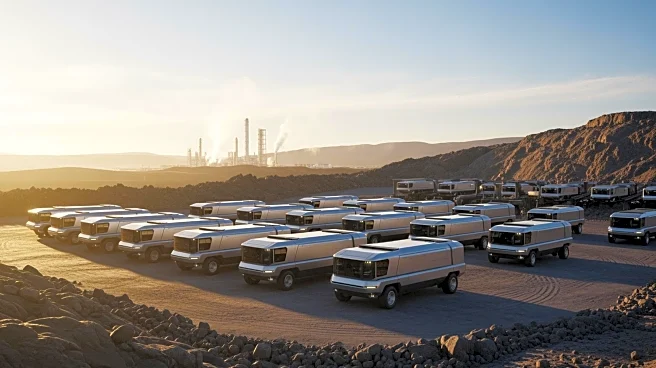
high-purity copper cathode for the U.S. market. The company has integrated advanced software and autonomous systems to enhance operations, aiming to overcome previous challenges and increase copper output. The implementation of MarianaOS, a unified software platform, facilitates automation across various operations, including drill and blast, truck and shovel orchestration, and process plant control. This system leverages machine learning and reinforcement learning to optimize operational tradeoffs, thereby increasing productivity and reducing costs. The integration of copper scrap processing into the refining circuit is also a key development, aiming to reduce U.S. copper scrap exports by processing both geologic and recycled feedstocks.
Why It's Important?
The advancements at Copper One are significant for the U.S. mining and refining industry, as they represent a shift towards more autonomous and efficient operations. By integrating advanced technologies, Mariana Minerals is addressing the challenge of a shrinking skilled labor pool while enhancing productivity and reducing operational costs. The ability to process both primary ore and secondary copper from scrap feedstocks aligns with broader industry trends towards sustainability and resource efficiency. This dual-feedstock approach not only supports domestic resource utilization but also reduces reliance on overseas processing, potentially strengthening the U.S. position in the global copper market. The success of this project could serve as a model for other mining operations seeking to implement similar technologies.
What's Next?
Mariana Minerals plans to scale Copper One's output to 50,000 metric tonnes per year, leveraging both geologic and scrap feedstocks. The company will continue to refine and expand its autonomous systems, potentially setting new standards for mining operations globally. As the project progresses, it may attract attention from other industry players and stakeholders interested in adopting similar technologies. The integration of copper scrap processing could also influence U.S. policies on resource management and recycling, encouraging further investment in domestic processing capabilities.
Beyond the Headlines
The development at Copper One highlights the growing importance of technology in transforming traditional industries. The use of machine learning and autonomous systems in mining operations not only enhances efficiency but also raises questions about the future of labor in the industry. As automation becomes more prevalent, there may be a need for new skill sets and training programs to support the workforce transition. Additionally, the focus on processing recycled materials aligns with global sustainability goals, potentially influencing environmental policies and corporate strategies in the mining sector.