


What's Happening?
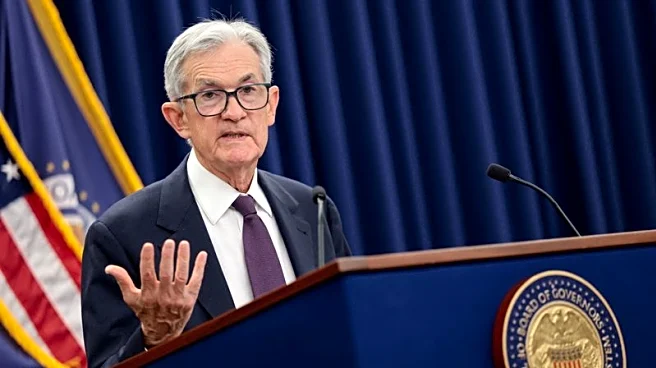
Bank of America economists have outlined conditions under which the Federal Reserve might consider raising interest rates, despite the current trend towards rate cuts. The potential rate hike is linked to surging energy costs and ongoing geopolitical
tensions, particularly the conflict involving the U.S. and Iran. This development could initially pressure cryptocurrencies and stocks, but experts suggest that Bitcoin might eventually benefit as a hedge against currency debasement. The digital asset has recently experienced fluctuations, trading below $70,000 after reaching a high of $75,600 earlier in the week. The situation is further complicated by the Federal Reserve's focus on core inflation, which remains above its target, and the potential for broader economic disruptions due to rising shipping costs for essential commodities.
Why It's Important?
The potential for a Federal Reserve rate hike is significant as it could lead to short-term volatility in the cryptocurrency market, affecting investors and financial institutions involved in digital assets. A rate hike could also signal a shift in monetary policy, impacting broader economic conditions, including inflation and employment rates. For Bitcoin, the situation presents a dual challenge and opportunity; while initial reactions may be negative, the asset could gain appeal as a protective measure against economic instability. This scenario underscores the interconnectedness of global events, monetary policy, and financial markets, highlighting the need for investors to remain vigilant and adaptable.
What's Next?
If the Federal Reserve decides to raise interest rates, it could lead to increased scrutiny and strategic adjustments by investors and financial institutions. The decision would likely influence market dynamics, prompting a reassessment of risk assets like cryptocurrencies. Additionally, the ongoing geopolitical tensions and their impact on energy prices will continue to be a critical factor in economic forecasts. Stakeholders, including policymakers and investors, will need to monitor these developments closely to navigate potential economic shifts effectively.