
What's Happening?
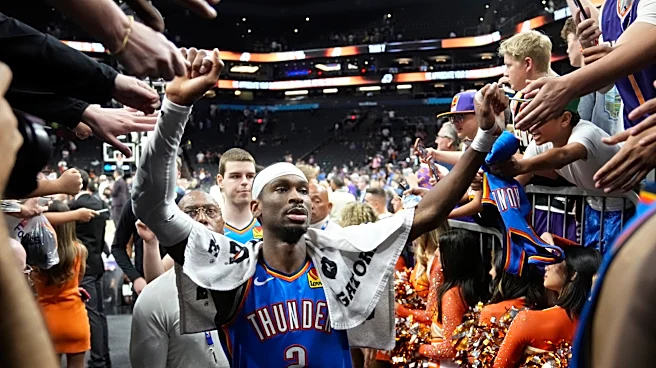
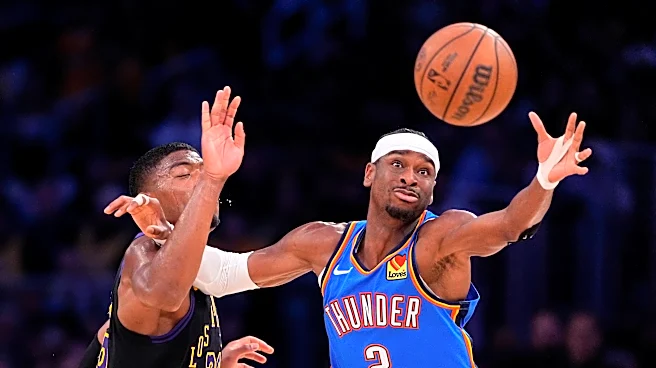
Shai Gilgeous-Alexander of the Oklahoma City Thunder has been awarded the NBA MVP for the second year in a row. This accolade comes as he continues to demonstrate exceptional performance on the court,
leading his team to the best record in the league. Despite his achievements, the spotlight is also on Victor Wembanyama of the San Antonio Spurs, who has been making significant strides in his performance, particularly in the latter half of the season. Wembanyama's defensive prowess and offensive capabilities have been highlighted by analysts and players alike, marking him as a formidable competitor in the league. His impact has been particularly noted during the playoffs, where the Spurs have shown a strong performance when he is on the court.
Why It's Important?
The recognition of Shai Gilgeous-Alexander as MVP underscores his influence and leadership in the NBA, reinforcing his status as a top player. However, the emergence of Victor Wembanyama as a potential rival highlights the dynamic and competitive nature of the league. Wembanyama's rapid development and impact on the game suggest a possible shift in the balance of power within the NBA. This scenario presents a compelling narrative for fans and stakeholders, as it could influence team strategies, player development, and the overall competitive landscape of the league. The ongoing rivalry between these players could drive viewership and engagement, benefiting the NBA's marketability and global reach.
What's Next?
As the playoffs continue, the performance of both Gilgeous-Alexander and Wembanyama will be closely watched. The outcome of the Western Conference finals, where their teams may face off, could further define their legacies and influence future MVP considerations. Teams across the league will likely analyze Wembanyama's gameplay to develop strategies to counter his unique skill set. Additionally, the Thunder's ability to maintain their championship form amidst rising competition will be a focal point. The evolving dynamics between these players could set the stage for future seasons, potentially leading to new rivalries and shifts in team hierarchies.
Beyond the Headlines
The rise of Victor Wembanyama not only challenges the current MVP but also raises questions about the future of player development and scouting in the NBA. His success could inspire teams to invest more in international scouting and development programs, seeking to uncover and nurture talent with similar potential. Furthermore, Wembanyama's defensive capabilities might influence how teams prioritize defensive skills in player evaluations. This shift could lead to a broader appreciation for defensive contributions in MVP considerations and player valuations, potentially altering the criteria for future awards.