




What's Happening?
The Broadway production 'Cats: The Jellicle Ball' has been reimagined to reflect Harlem's Black and Latino queer ballroom culture. This adaptation of Andrew Lloyd Webber's musical, originally based on T.S. Eliot's 'Old Possum's Book of Practical Cats,'
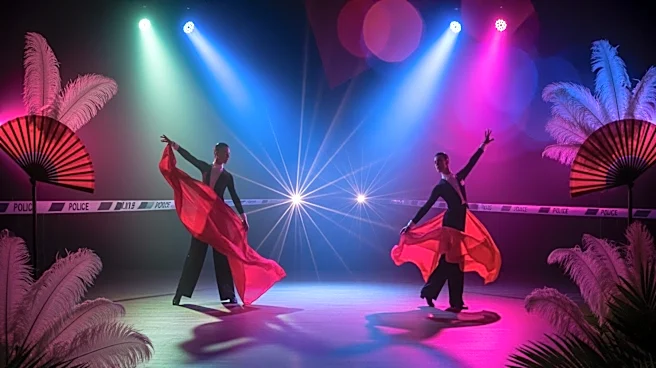
integrates elements from the underground drag house community, known for its competitive runway categories. The show features a diverse cast and audience, with performances that include struts, sashays, and vogueing, set against a backdrop of house music. The production is noted for its vibrant reinterpretation of the original musical, with a focus on transformation and community.
Why It's Important?
This adaptation of 'Cats' is significant as it highlights the intersection of traditional theater with contemporary queer culture, offering a platform for representation and visibility of marginalized communities. By incorporating elements of ballroom culture, the production not only pays homage to the resilience and creativity of the LGBTQ+ community but also challenges conventional narratives in theater. This could potentially influence future Broadway productions to embrace more diverse and inclusive storytelling, impacting the cultural landscape and audience engagement.
What's Next?
The success of 'Cats: The Jellicle Ball' on Broadway could lead to a national tour, bringing this unique cultural fusion to a wider audience. The production's innovative approach may inspire other theatrical works to explore similar themes, fostering a broader acceptance and understanding of queer culture in mainstream entertainment. Additionally, the show's impact might encourage more collaborations between traditional theater and contemporary cultural movements.
Beyond the Headlines
The reimagining of 'Cats' as a celebration of queer ballroom culture underscores the ongoing evolution of theater as a medium for social commentary and change. It highlights the importance of inclusivity and diversity in the arts, offering a space for underrepresented voices to be heard. This production also serves as a reminder of the historical struggles faced by the LGBTQ+ community, while celebrating their contributions to cultural and artistic innovation.