







What's Happening?
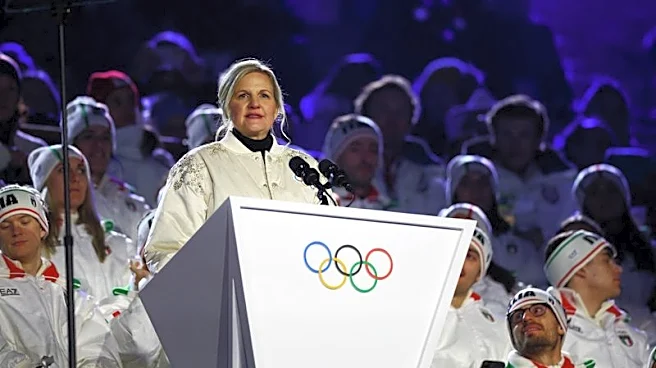
The International Olympic Committee (IOC) has decided not to include summer sports in the 2030 Winter Games, maintaining a traditional focus on sports practiced on snow or ice. This decision was confirmed by IOC President Kirsty Coventry during a virtual
news conference following an Executive Board meeting. The IOC is currently reviewing the Olympic program to manage the cost and complexity of the Games, with a working group exploring potential changes for future events, including the 2034 Winter Games in Utah. The proposal to include sports like cross-country running and cyclocross was backed by the U.S. Olympic and Paralympic Committee but faced opposition from international federations of traditional winter sports. The IOC aims to regain control over the Olympic program, ensuring it remains innovative while managing its growth. The Los Angeles 2028 Summer Games will feature new sports such as flag football and cricket, reflecting this strategy.
Why It's Important?
The IOC's decision to exclude summer sports from the 2030 Winter Games underscores its commitment to preserving the traditional nature of the Winter Olympics. This move is significant as it addresses concerns about the growing complexity and cost of the Games, which have expanded significantly over the years. By maintaining a clear distinction between summer and winter sports, the IOC aims to streamline the event and ensure it remains manageable for host cities. This decision also highlights the ongoing debate within the Olympic community about how to balance tradition with innovation. The inclusion of new sports in the Los Angeles 2028 Summer Games indicates a strategic effort to attract new audiences and maintain the Olympics' global appeal.
What's Next?
The IOC's full membership is set to meet in June to consider proposals from the 'Fit for the Future' initiative, which includes discussions on Olympic Games delivery and commercial partnerships. The working group will continue to explore how sports and events can be added or removed from both Summer and Winter Games, with a focus on creating a more fluid and adaptable program. The outcome of these discussions could influence the structure of future Olympic events, including the 2034 Winter Games. The IOC's approach to managing the growth of the Games will be closely watched by stakeholders, including national Olympic committees and international sports federations.