







What's Happening?
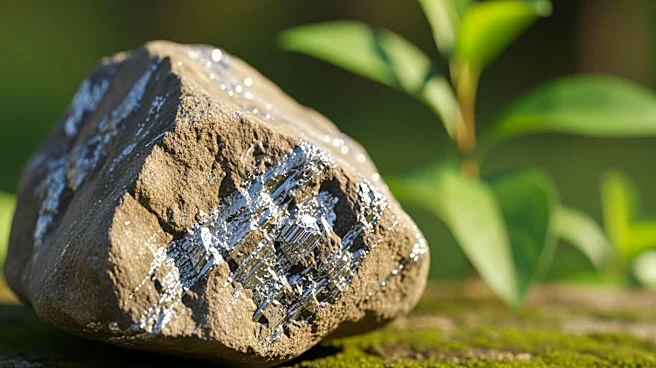
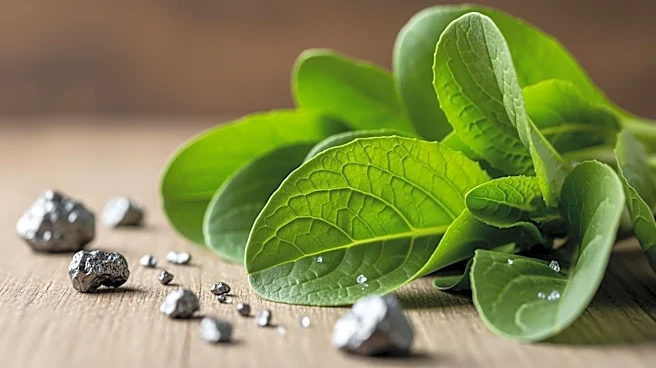
Research has identified certain leafy vegetables, particularly those in the Brassicaceae family, as effective tools for extracting valuable metals from contaminated soils. This process, known as phytomining, involves plants absorbing metals through their
roots and concentrating them in their leaves. The University of Queensland's Sustainable Minerals Institute has confirmed that crops like kale and mustard can hyperaccumulate thallium, a toxic but economically valuable metal. The potential for phytomining to remediate contaminated land while producing a recoverable resource is significant, offering an alternative to conventional mining methods.
Why It's Important?
Phytomining presents a dual benefit of environmental remediation and resource recovery, addressing the challenges of land degradation and metal scarcity. The economic value of metals like thallium, used in medical isotopes and superconductors, makes plant-based extraction an attractive option. This method could reduce the ecological impact of traditional mining and provide a sustainable source of critical minerals. However, the use of food crops for metal extraction raises food safety concerns, necessitating clear management and separation of phytomining sites from agricultural fields.
Beyond the Headlines
The development of phytomining could lead to significant shifts in how we approach both agriculture and mining. By integrating genetic engineering and soil amendments, the efficiency of metal extraction can be enhanced, making phytomining economically competitive. This approach aligns with broader trends towards sustainable and environmentally friendly industrial practices. The research also highlights the need for collaboration between plant scientists, geochemists, and metallurgists to optimize the process and ensure safety and efficacy.