






What's Happening?
Aspera Biomedicines Inc., a biotechnology company focused on cancer stem cell therapies, has successfully launched its second ADAR1p150 protein crystallization experiment to the International Space Station (ISS) aboard the SpaceX CRS-34 mission. The experiment aims
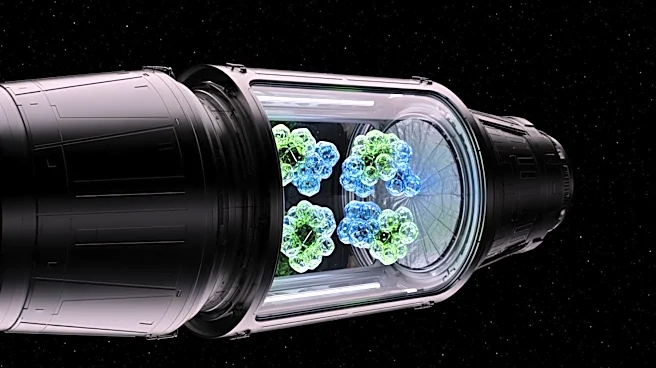
to advance the development of an oral formulation of Rebecsinib, a first-in-class ADAR1 inhibitor, for clinical trials in advanced cancers. The mission builds on Aspera's previous work and utilizes Redwire Corporation's Pharmaceutical In-space Laboratory technology to crystallize proteins in microgravity, providing structural insights that are difficult to achieve on Earth.
Why It's Important?
The successful launch of Aspera's experiment represents a significant step in the development of targeted cancer therapies. By leveraging the unique environment of space, the company aims to gain detailed structural insights into the interaction between Rebecsinib and ADAR1, which could lead to improved formulations and broader patient access. The experiment underscores the potential of space-based research to accelerate drug development and address complex medical challenges. Aspera's work could have far-reaching implications for the treatment of various cancers, particularly those driven by cancer stem cells.
What's Next?
Aspera Biomedicines will continue to analyze the results of the crystallization experiment to inform the development of an oral formulation of Rebecsinib. The company plans to begin recruitment for a Phase 1 trial in patients with high-risk myelofibrosis and secondary acute myeloid leukemia. The insights gained from the experiment could also guide the development of next-generation ADAR1 inhibitors. Aspera's ongoing research and clinical trials will be closely watched by the medical and scientific communities for their potential impact on cancer treatment.