




What's Happening?
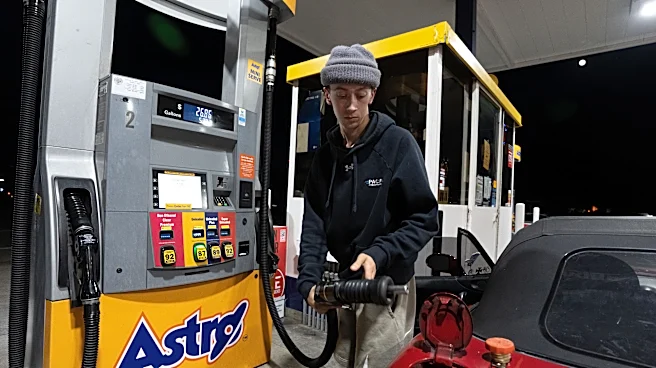
Gas prices across the United States, including Michigan, are experiencing significant fluctuations, drawing attention from consumers and industry experts alike. Kevin Ketels, the director of Entrepreneurship & Innovation Programs at Wayne State University,
provides insights into how these rising oil prices are affecting various sectors. The increase in oil prices is not only impacting the cost of gasoline for drivers but is also influencing a wide range of industries that rely on oil as a key input. This includes transportation, manufacturing, and agriculture, where increased costs are likely to be passed on to consumers. The situation is being closely monitored as stakeholders brace for potential economic ripple effects.
Why It's Important?
The rise in oil prices has broad implications for the U.S. economy, affecting both consumers and businesses. For consumers, higher gas prices mean increased costs for commuting and travel, which can reduce disposable income and affect spending in other areas. For businesses, especially those in transportation and logistics, higher fuel costs can lead to increased operational expenses, which may result in higher prices for goods and services. This can contribute to inflationary pressures, affecting the overall economic stability. Industries that are heavily dependent on oil may need to explore alternative strategies to mitigate these costs, such as investing in more fuel-efficient technologies or passing costs onto consumers.
What's Next?
As oil prices continue to fluctuate, businesses and consumers will need to adapt to the changing economic landscape. Companies may seek to implement cost-saving measures or explore alternative energy sources to reduce dependency on oil. Policymakers might also consider interventions to stabilize prices or provide relief to affected industries and consumers. The situation remains dynamic, and stakeholders will be watching closely for any policy changes or market developments that could influence future oil prices.