






What's Happening?
The U.S. International Trade Commission (ITC) has ruled in favor of Infineon Technologies in a patent infringement case involving gallium nitride (GaN) technology against Chinese company Innoscience. The ruling mandates import and sales bans on Innoscience's
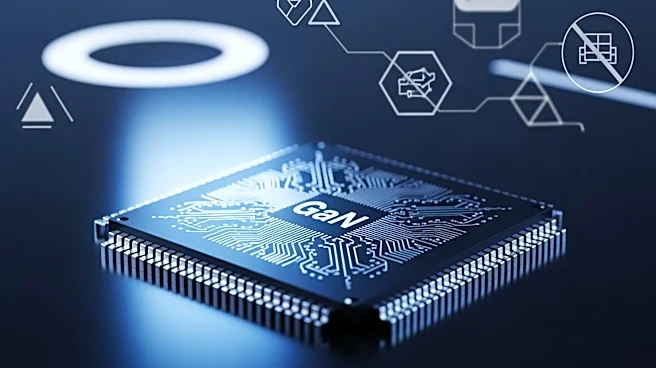
products in the U.S., following an initial determination made in December 2025. Infineon, a German integrated device manufacturer, claims to hold the industry's most extensive GaN patent portfolio, which includes around 450 patent families. GaN semiconductors are known for their higher power density, faster switching, and lower losses compared to silicon, with applications in electric vehicle powertrains, renewable energy, and industrial automation. The dispute is not limited to the U.S., as Infineon is also pursuing legal action in Germany, where a court has already found infringement on one of its patents.
Why It's Important?
This ruling is significant as it underscores the importance of intellectual property rights in the competitive semiconductor industry, particularly in the rapidly growing GaN technology sector. The decision could have substantial implications for Innoscience's business operations in the U.S. and potentially influence its market strategy globally. For Infineon, the ruling reinforces its position as a leader in GaN technology and its commitment to protecting its innovations. The outcome may also serve as a precedent for other companies in the semiconductor industry, highlighting the critical role of patent protection in maintaining competitive advantage and fostering innovation.
What's Next?
The ITC's ruling is subject to a 60-day Presidential review before it can be enforced. During this period, stakeholders will be closely monitoring any developments, including potential appeals or negotiations between the involved parties. The outcome of the parallel legal proceedings in Germany could further impact the global dynamics of the GaN semiconductor market. Companies in the industry may also reassess their patent strategies and collaborations to mitigate risks associated with intellectual property disputes.