



What's Happening?
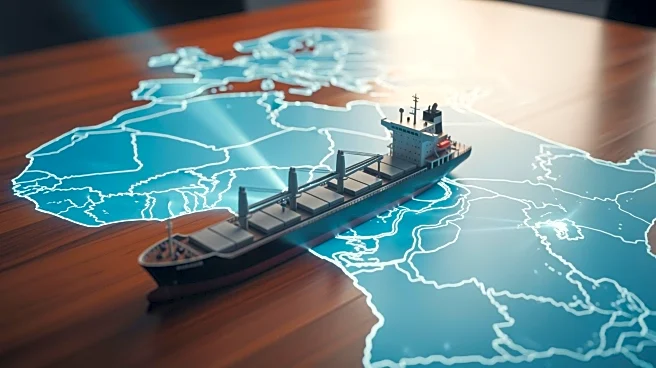
Maersk has announced a temporary retreat from its Red Sea sailings for two of its routes, citing unforeseen constraints in the region. The company will reroute some of its upcoming sailings on the ME11 and MECL services from the Suez Canal to the Cape
of Good Hope. This decision affects sailings connecting Saudi Arabia and the Middle East to the U.S. East Coast and the Mediterranean. The move comes amid regional tensions, with the U.S. increasing its naval presence in the Middle East and threats from the Houthis. Maersk's decision reflects the challenges of navigating the complex security environment in the Red Sea.
Why It's Important?
Maersk's rerouting decision highlights the impact of regional security issues on global shipping routes. The Red Sea is a critical maritime corridor, and disruptions can have significant implications for global trade. The decision underscores the importance of security in maintaining efficient supply chains and the potential costs associated with rerouting. The move also reflects broader geopolitical tensions in the Middle East, with the U.S. and Iran at odds, affecting commercial operations. Maersk's actions may influence other shipping companies' strategies in the region, potentially leading to increased shipping times and costs.
What's Next?
Maersk plans to continue monitoring the security situation in the Red Sea and may adjust its routes accordingly. The company is working with its security partners to ensure safe passage for its vessels. Customers will receive updated transport plans to accommodate the changes. The Suez Canal Authority is keen to resume normal operations to demonstrate regional stability. The ongoing U.S. naval buildup in the Middle East may further influence shipping routes and security measures. The situation remains fluid, and Maersk will likely reassess its strategy as conditions evolve.