




What's Happening?
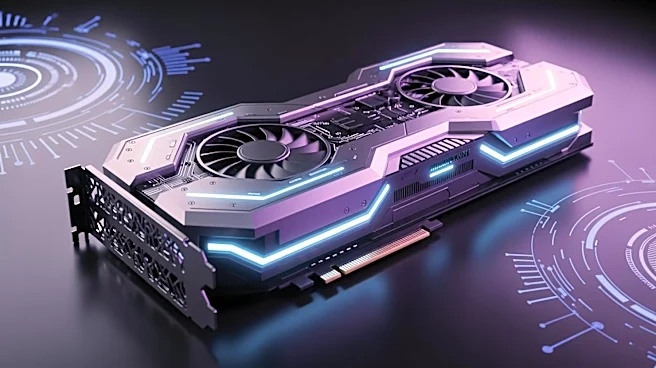
Nvidia's Rubin CPX, a GPU designed for AI inference, is reportedly facing delays, which could be beneficial for PC gamers. The Rubin CPX was announced last September as part of Nvidia's AI product lineup. However, recent reports suggest that the project
may be effectively canceled due to a lack of orders for necessary components like printed circuit boards and DRAM modules. This delay is attributed to Nvidia's $20 billion licensing deal with Groq, whose language processing unit (LPU) design is more suited for inference tasks. The absence of Rubin CPX could alleviate pressure on GDDR7 supply, potentially preventing price hikes for Nvidia's RTX 50-series graphics cards.
Why It's Important?
The delay in the Rubin CPX project could have significant implications for the PC gaming industry. With the high demand for AI-related components, the availability of GDDR7 memory has been a concern. The potential cancellation of Rubin CPX might ease the demand for GDDR7, stabilizing prices for consumer graphics cards. This development is crucial for gamers who have faced rising costs due to the increased demand for AI and gaming hardware. Additionally, Nvidia's partnership with Groq could lead to more efficient AI solutions, further impacting the tech landscape.
What's Next?
If the Rubin CPX project is indeed sidelined, Nvidia may focus on integrating Groq's LPU into its Rubin platform, which could lead to new AI advancements. The gaming community will likely monitor Nvidia's next moves closely, especially regarding the availability and pricing of the RTX 50-series cards. The industry will also watch for any official announcements from Nvidia regarding the status of Rubin CPX and its future plans for AI inference technology.