




What's Happening?
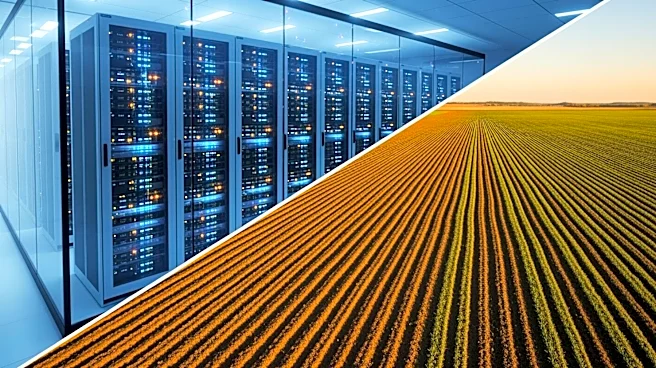
In the rural municipality of Rosser, a former canola and pea processing facility is being converted into a Bell Canada AI data center. This transformation is part of a broader trend where AI infrastructure is increasingly occupying land traditionally
used for agriculture. The Bell Regina facility, for example, will require significant electricity and infrastructure, impacting local land use. An 86-year-old farmer in Pennsylvania was offered $15 million for his land for a data center but refused, highlighting the tension between agricultural land use and tech development.
Why It's Important?
The expansion of AI data centers into rural areas poses significant challenges for agricultural communities. As tech companies seek land for infrastructure, they compete with agriculture, potentially driving up land prices and altering local economies. This shift raises questions about land use priorities and the long-term viability of farming in affected areas. The situation also reflects broader economic trends where technology and agriculture intersect, with implications for food security and rural livelihoods.
Beyond the Headlines
The competition for land between AI infrastructure and agriculture highlights deeper issues of economic and environmental sustainability. As AI data centers proliferate, they may contribute to a shift in rural economies, affecting land values and succession planning for farmers. This development also raises ethical questions about the balance between technological progress and preserving agricultural heritage and landscapes.