







What's Happening?
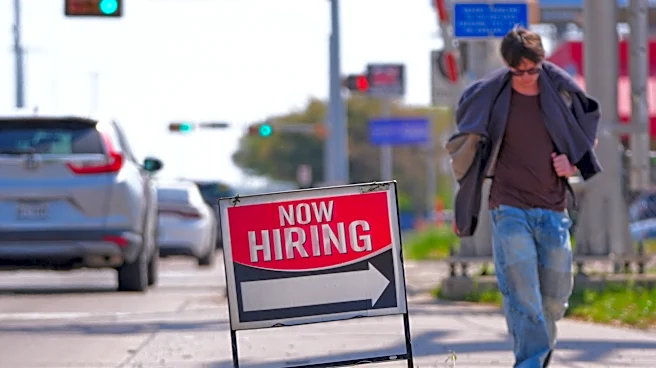
The U.S. labor market experienced a stronger-than-expected recovery in March, with nonfarm payrolls increasing by 178,000, surpassing the Dow Jones consensus estimate of 59,000. This growth marks a reversal from the previous month's decline of 133,000
jobs. The unemployment rate decreased slightly to 4.3%, although this was largely due to a reduction in the labor force. The health care sector contributed significantly to job growth, adding 76,000 positions, partly due to the return of workers from a strike at Kaiser Permanente. Other sectors such as construction and transportation also saw job increases, while the federal government and financial activities experienced job losses.
Why It's Important?
The unexpected job growth in March provides a positive signal for the U.S. economy, suggesting resilience in the labor market despite previous setbacks. However, the decline in the labor force participation rate to 61.9% indicates underlying challenges, such as long-term unemployment and discouraged workers. The modest increase in wages, with average hourly earnings rising by only 0.2% for the month, suggests that wage growth remains sluggish. This could impact consumer spending and economic recovery. The Federal Reserve may maintain its current monetary policy stance, given the mixed signals from the labor market data.
What's Next?
The labor market's performance in the coming months will be closely monitored, especially as the economy navigates potential challenges such as inflationary pressures and geopolitical uncertainties. Policymakers may need to consider measures to boost labor force participation and address wage stagnation. The health care sector's continued growth could be a focal point for job creation, while sectors experiencing job losses may require targeted support. The overall economic outlook will depend on the balance between job growth and the broader economic conditions.